









Travellers in search of natural wonders have long been drawn to the shimmering beauty of the world’s glaciers. Ever-changing in nature, these giant masses of ice vary in size, shape and colour, compelling us to stand in awe and admire. From Alaska to Iceland, the Arctic to New Zealand, there is something mesmeric about seeing an age-old body of ice sweep over a mountain valley. We have put together a list of our favourite destinations to go and see these mesmerising natural spectacles.
Glaciers are an icon of nature. Ice in its largest form that is captivating and revealing. As the planet warms, many of these vast masses of ice are retreating at a rapid rate. From Switzerland to Greenland, what were once considered permanent features of the landscape are shrinking. In this respect, glaciers embody the impact of climate change. A powerful reminder that what we do and how we live, literally shapes the planet.
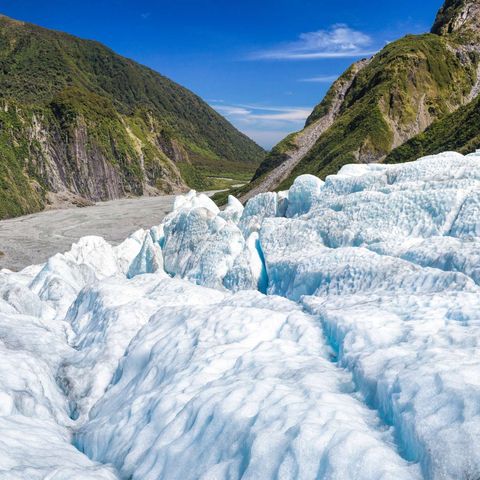
Seeing a glacier with your own eyes is a memorable experience. There’s the incongruity of seeing an ice tongue surrounded by green valleys, like in New Zealand. The artistry of layers of ash and volcanic rock embedded in ice in Iceland – fire and ice literally fused together over time. And there’s the drama of witnessing an iceberg calve from a glacial wall in Alaska or the Arctic.
Read on for our pick of worldwide destinations to see glaciers that not only produce ‘wow’ moments but also fire the need to protect and cherish our planet.
1. Alaska
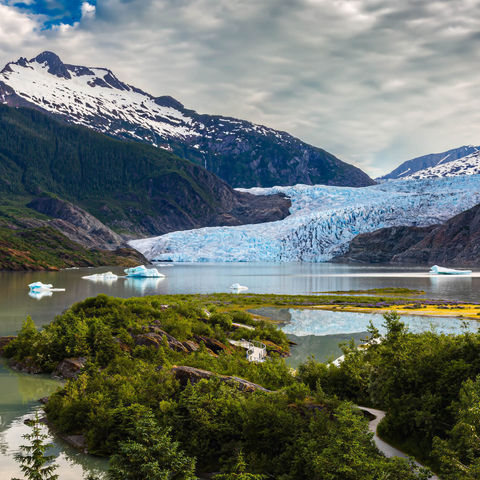
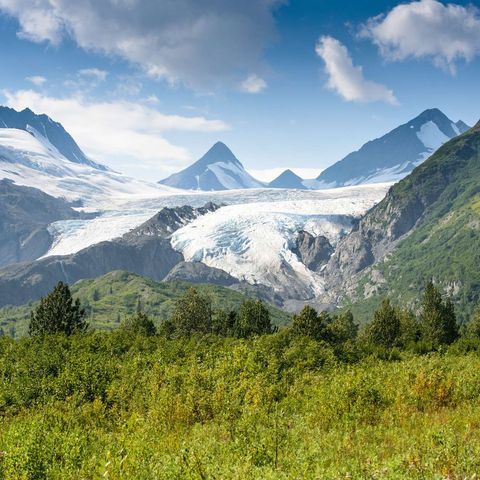
The largest state in the US, Alaska has some of the largest and best-known glaciers in the world. The coastal fringes of southwest Alaska and the Inside Passage are among the best place to find them with Mendenhall glacier and Hubbard glacier among the most famous.
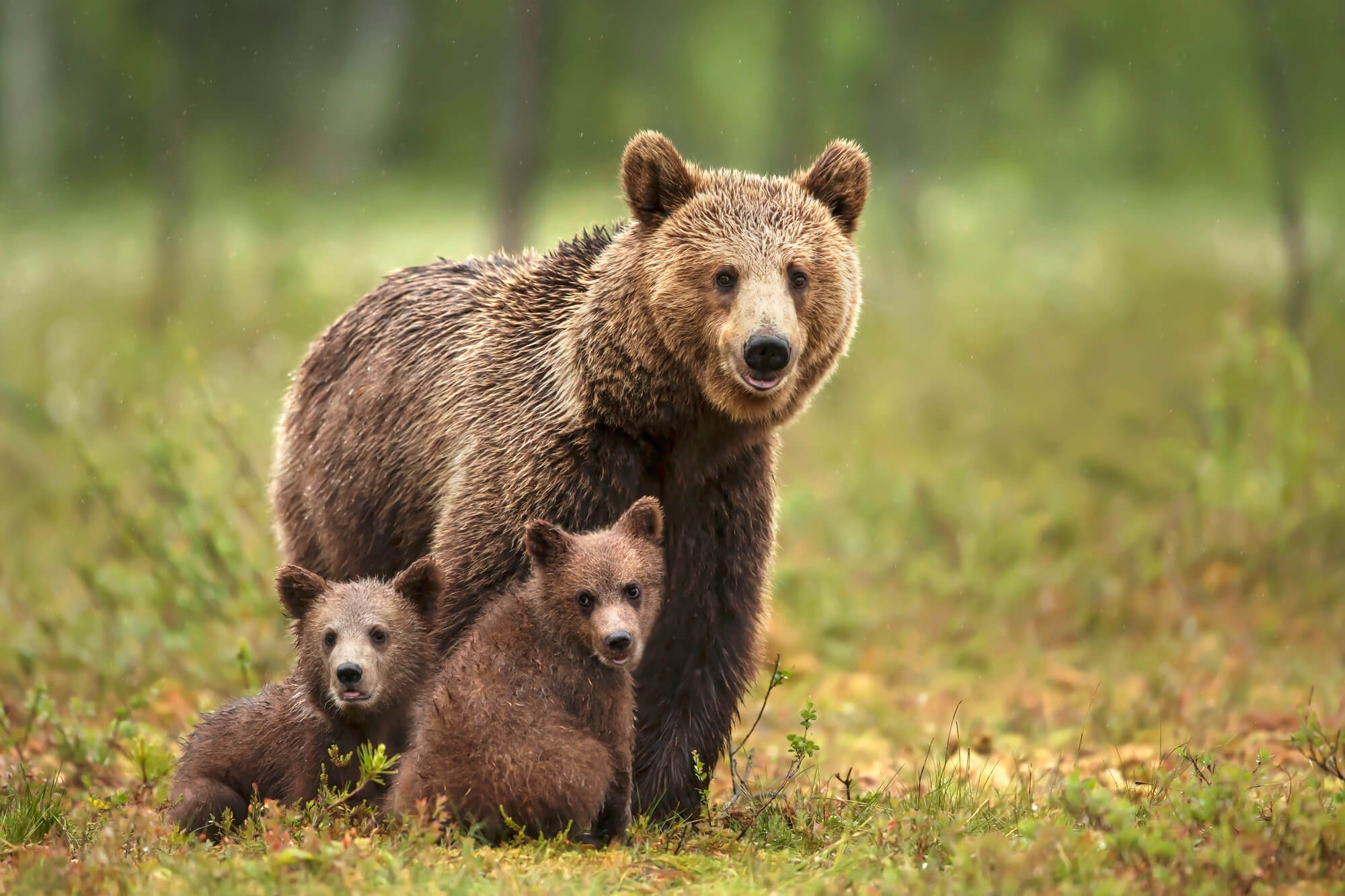
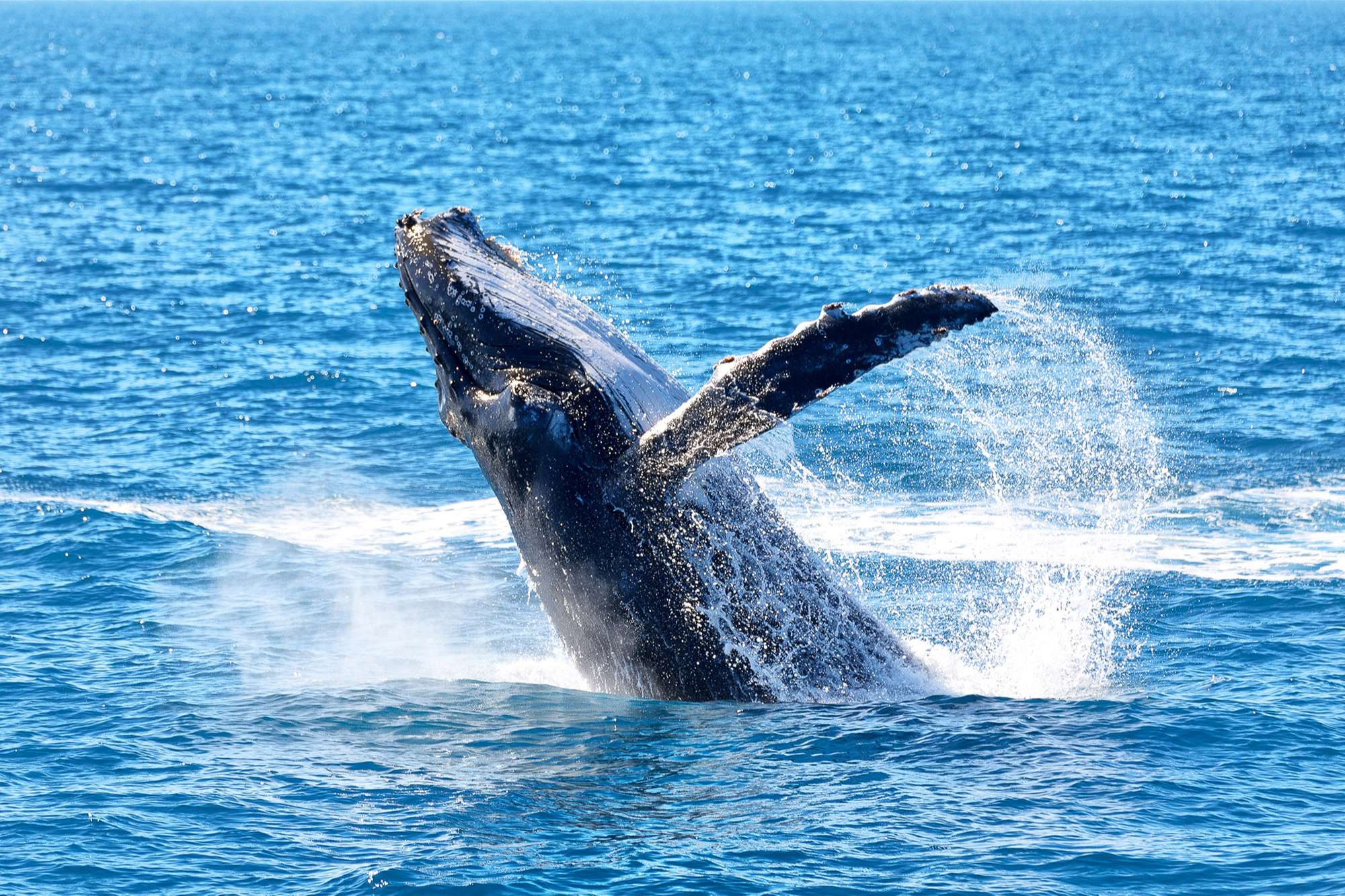
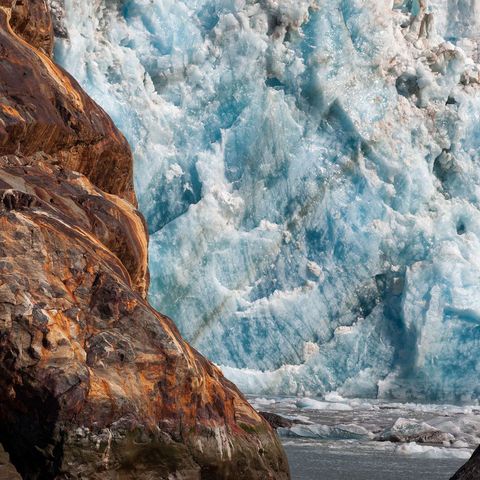
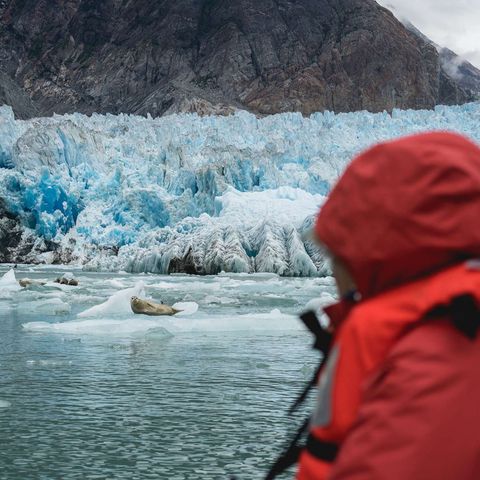
Covering a staggering 3.3 million acres, Glacier Bay National Park is a spectacular mix of deep fjords, the world’s tallest coastal mountains and over 1000 glaciers, 16 of which are tidewater glaciers and actively calve into the deep waters. Such breathtaking scenery provides a fitting backdrop to a wealth of wildlife including humpback whales, sea otters and seals as well as the occasional black or brown bear on the shoreline.
Spectacular Prince William Sound is another of glacier hotspot. It is home to over one hundred named glaciers including active tidewater glaciers that regularly calve icebergs. This wildlife haven in south Alaska covers 10,000 square miles of waterways, islands, fjords and glaciers. Visitors are likely to encounter humpback whales, orcas, sea otters and seals.
Over 1 million visitors explore Alaska via cruise annually, and most glacier tours operate from June to September
Individually, Mendenhall and Hubbard glaciers are the among the most famous. The former is the most accessible glacier in Alaska, about 13 miles from the capital, Juneau’s downtown area. Mendenhall is easy to approach from the visitor center. The source of Hubbard glacier is high in Wrangell–St. Elias National Park, and is North America’s longest at 75 miles. It forms a vast 6-mile-wide terminus where it meets the ocean at Disenchantment Bay.
Day cruises and scenic flights are the best way to weave a glacier experience into an independent self-drive holiday or opt for a small-ship expedition-style cruise.
Recommended holiday:
Inside Passage Glacier Bay Cruise – join guided nature hikes ashore, kayak amongst icebergs and keep your eyes peeled for bears and whales on this small ship expedition-style.
2. Iceland
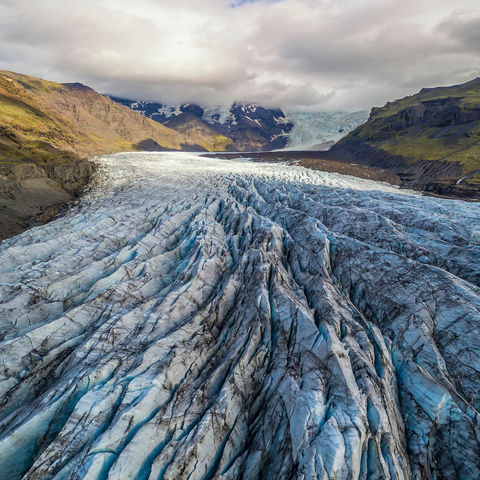
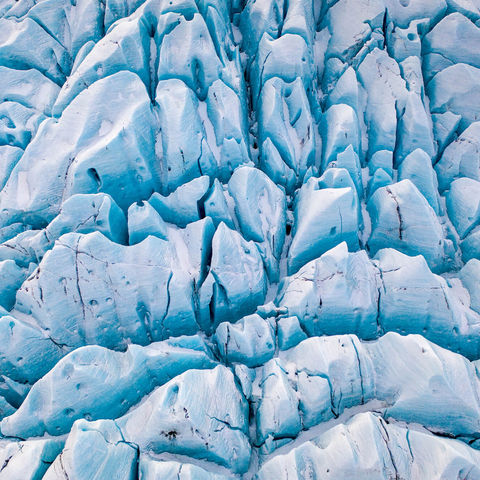
Known as the land of ‘fire and ice’, Iceland is a ‘must-visit’ destination for glacier experiences. Over 10% of the land area is covered in permanent ice, including the largest icecap in Europe, Vatnajokull. Covering around 8000 sq. km, parts of this ice behemoth are 1000m thick.
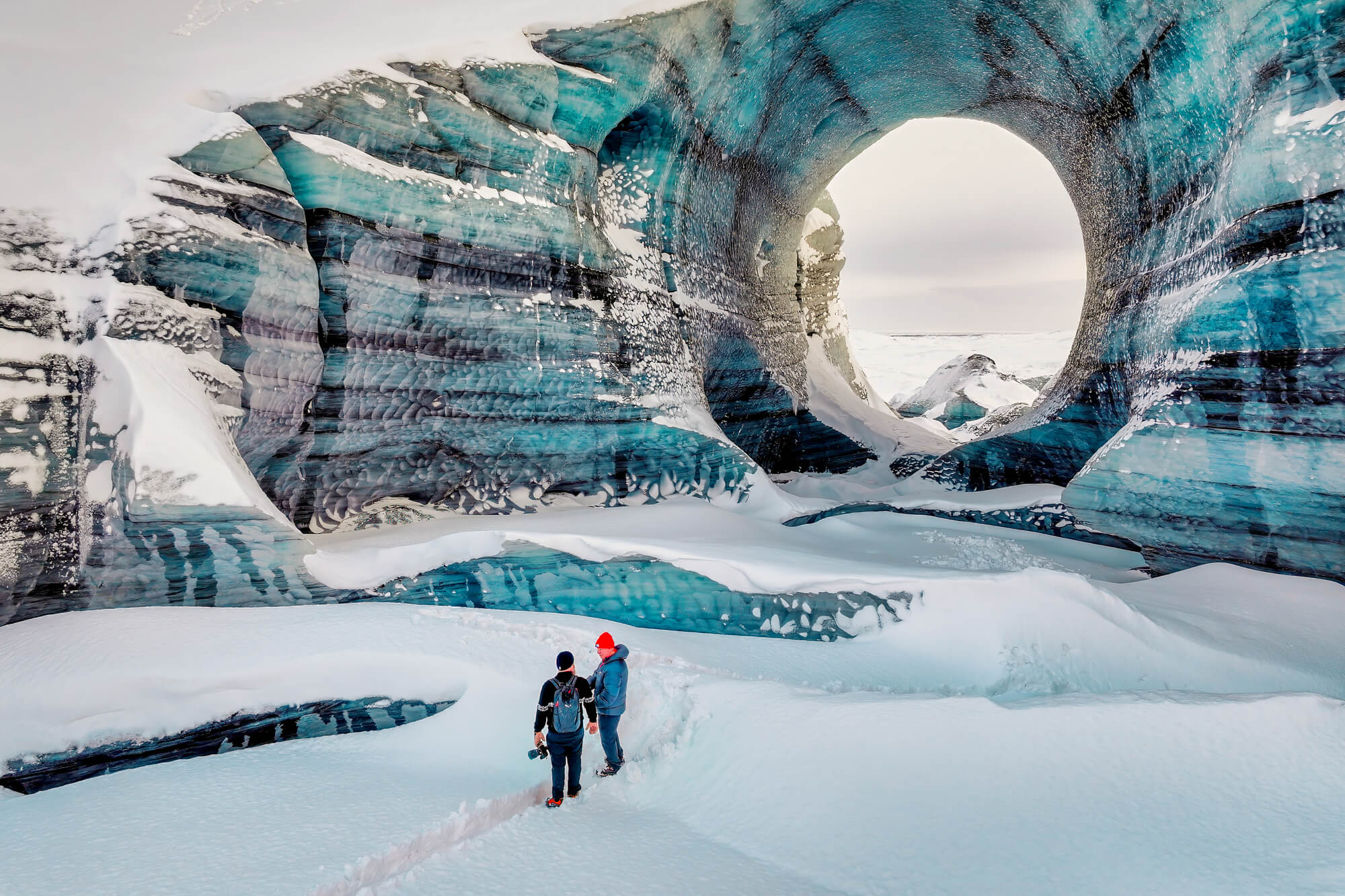
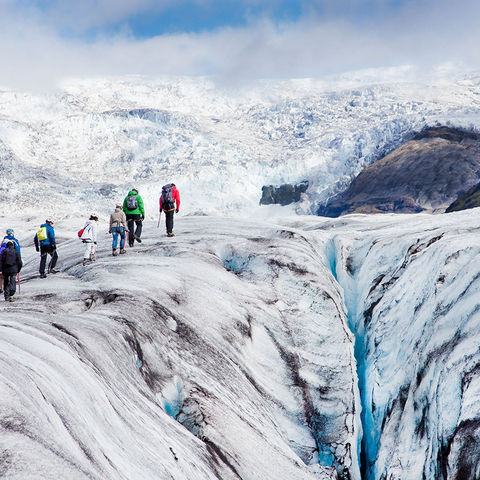
Most of Iceland’s glaciers are in the south producing a lot of meltwater that forms powerful rivers through the countryside. Some sweep towards the sea in the form of ‘outlet glaciers’ that come into view as you drive along the ring road. These ice tongues are easily accessible for professionally guided glacier walks and snowmobiling trips. On Langjokull, you can even venture inside a glacier exploring the exquisite beauty of an icecap interior walking through a wide, well-lit man-made tunnel.
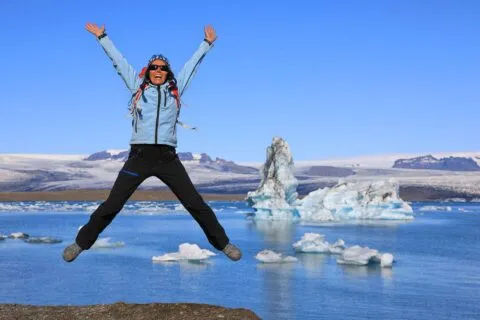
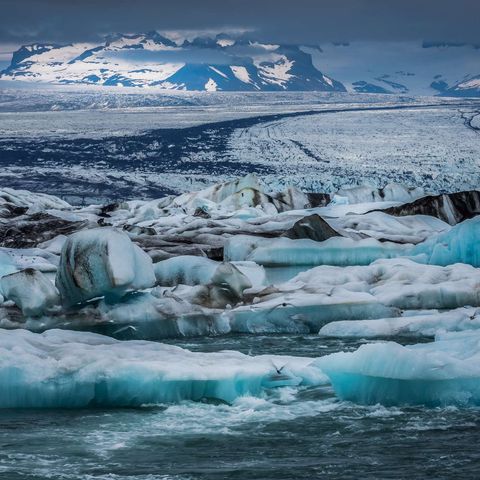
In the south-east, retreating Breidamerkurjokull glacier has formed on of Iceland’s greatest natural wonders – the lagoon at Jokulsarlon. Here, icebergs drift through a large coastal lake before finding the ocean, only for many to be thrown back onto the black sand of adjacent Diamond Beach.
You can find out more about glaciers at the Perlan in Reykjavik – the Glaciers and Ice Cave exhibition is the first of its kind in the world. In addition, we would recommend staying at Glacier Lodge as a base for the beautiful Snaefellsjokull glacier that towers over the iconic Snaefellsnes peninsula.

Recommended holiday:
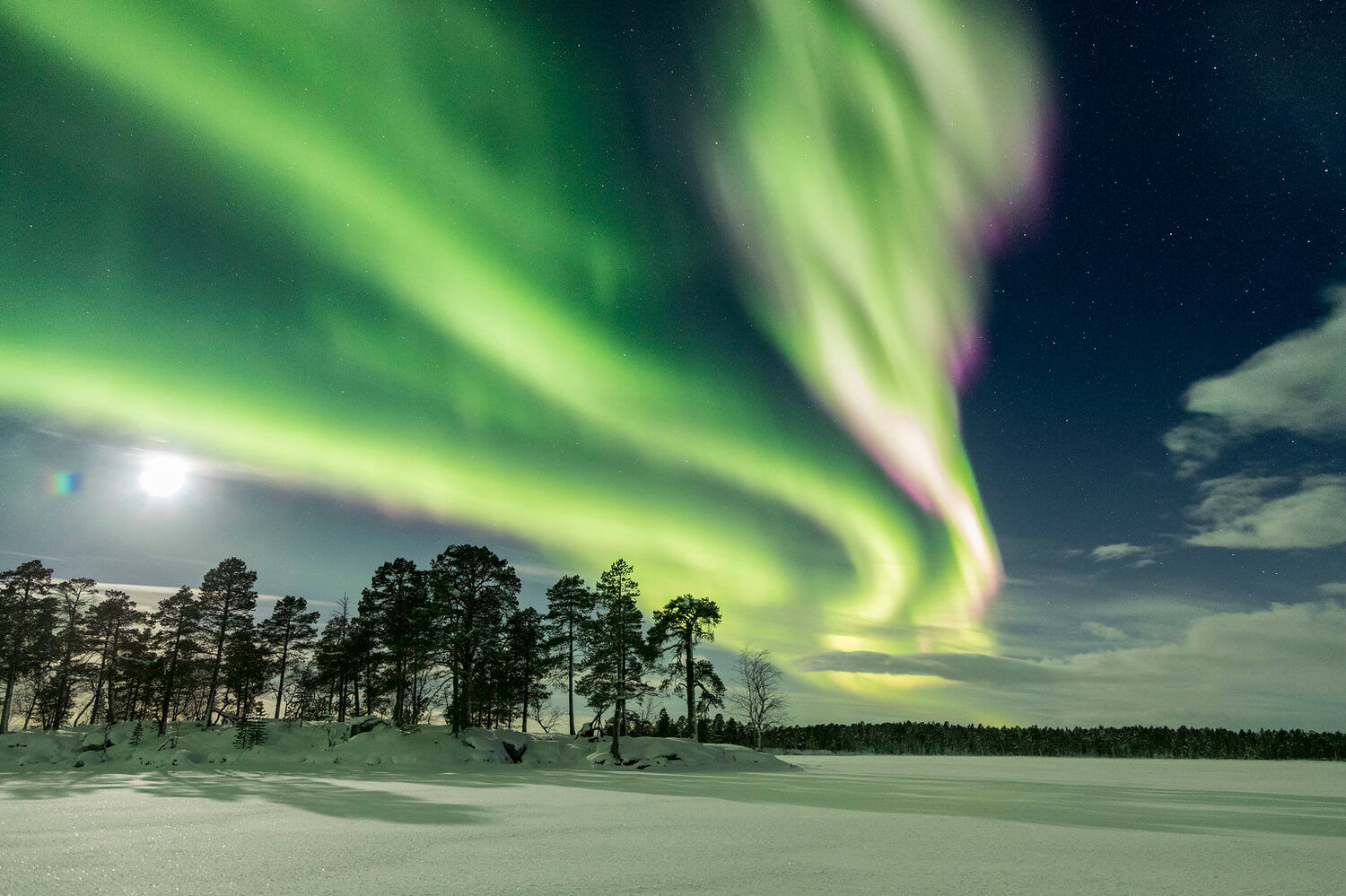
Northern Lights, Glaciers and Waterfalls – ideally located close to the Langjokull icecap, the secluded rural setting of Hotel Husafell is also perfect for northern lights hunting
3. Canada
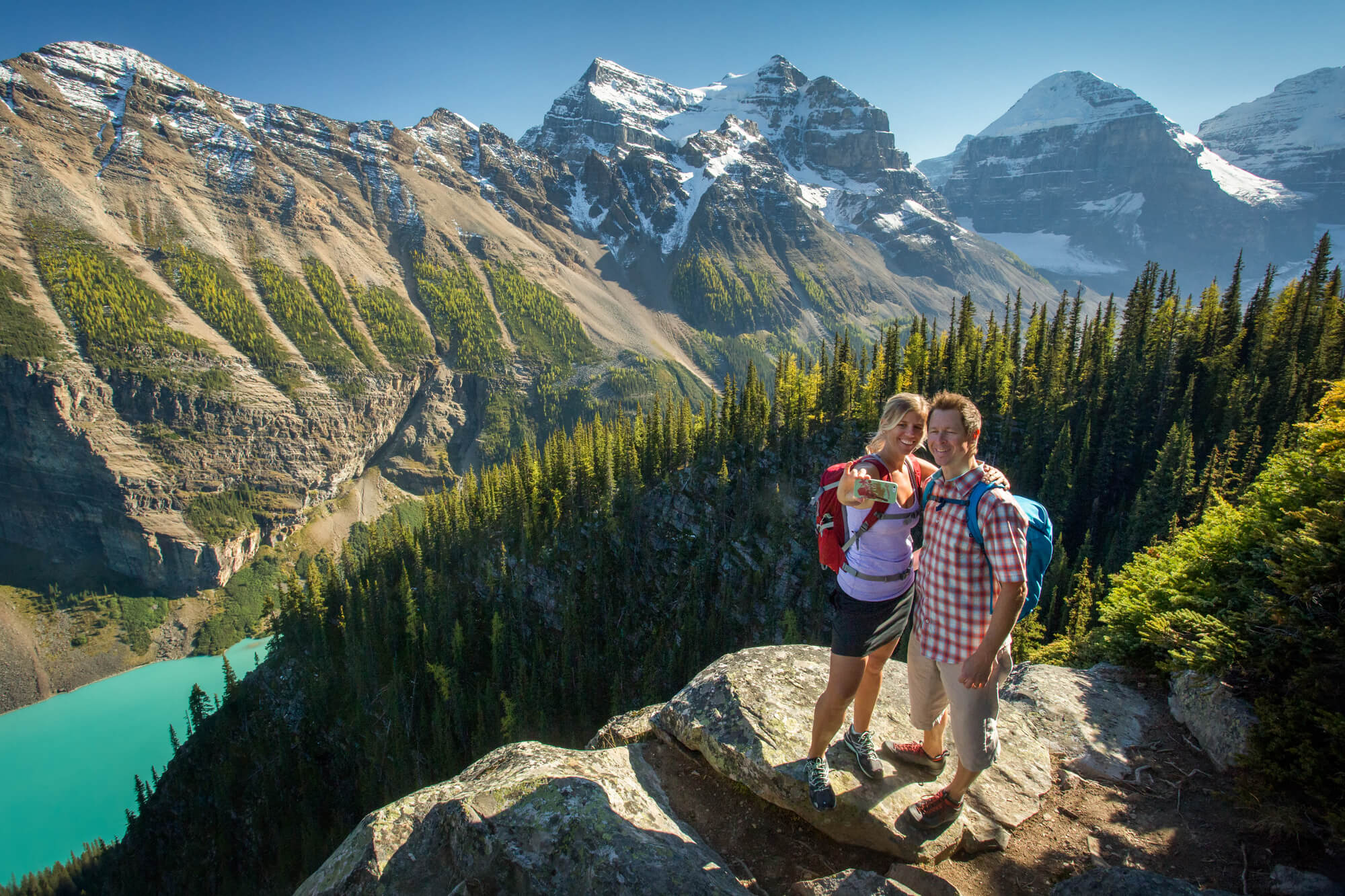
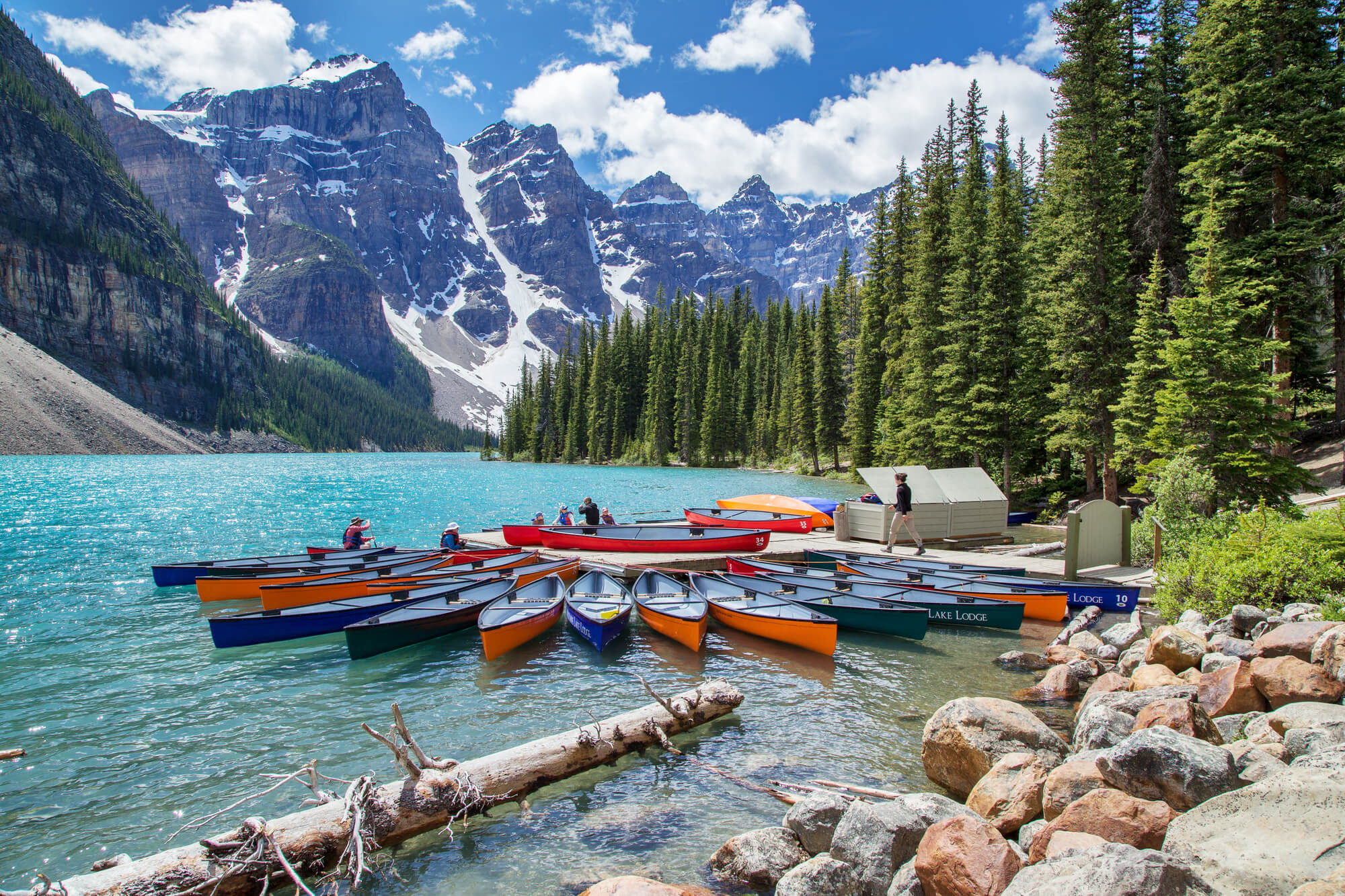
In the shadow of Canada’s Rocky Mountains, in between Alberta’s Jasper and Lake Louise, lies the Icefields Parkway. Throughout this 230 km stretch of road are over 100 icefield glaciers, as well as soaring mountains, incredible waterfalls and emerald lakes. It’s one of the most scenic drives in a country renowned for its scenic drives. Each twist in the road, or glance in the rear-view mirror revealing another breathtaking view.
The most significant glacial area along the way is the Columbia Icefield, where six major glaciers diverge. The most accessible and most visited glacier in North America is Athabasca Glacier. Six-wheeler ice trucks take visitors onto the ancient ice for incredible views. An alternative perspective of the glacial valley awaits the sturdy of heart, via the extraordinary Glacier Skywalk – a curved, glass-bottomed walkway extending 280m above ground.
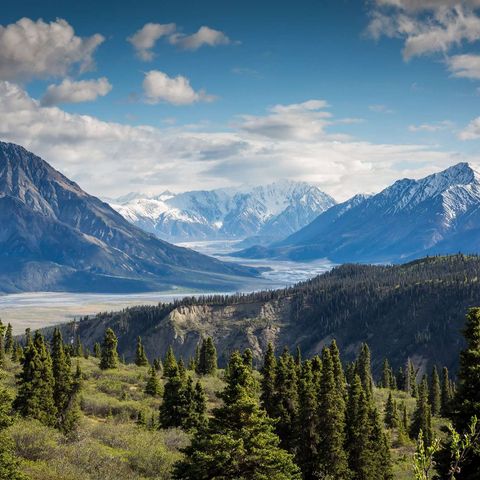
Scale takes on a different complexion at Kluane National Park down in the south-west of The Yukon. On its own, Kluane is larger than Wales, but together with adjacent Tatshenshini-Alsek NP (British Columbia) and Wrangell-St Elias and Glacier Bay NP (Alaska), this one piece of land split by three borders makes up the largest protected land in North America as well as the largest non-polar icefield in the world. Without a doubt, the best way to gain an understanding of the sheer scale of Kluane is on a sightseeing flight. From the air, the glaciers looked like roads as they came together and join as one.


Recommended holiday:
The Rocky Mountains in Depth Self-Drive – from Banff to Jasper, discover magnificent lakes, alpine scenery, rugged peaks and glittering glaciers on this spectacular self-drive.
4. New Zealand
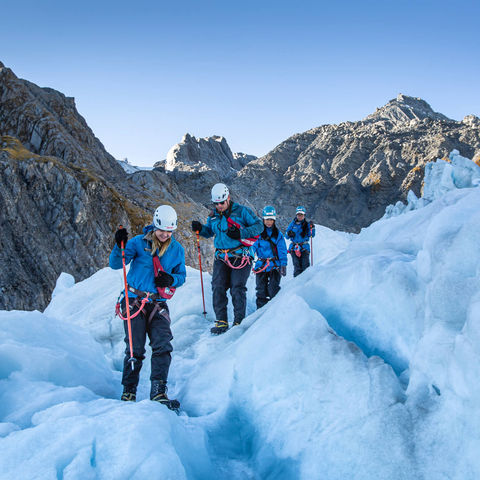
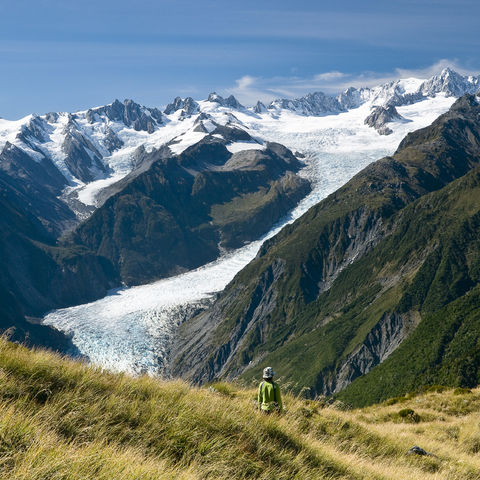
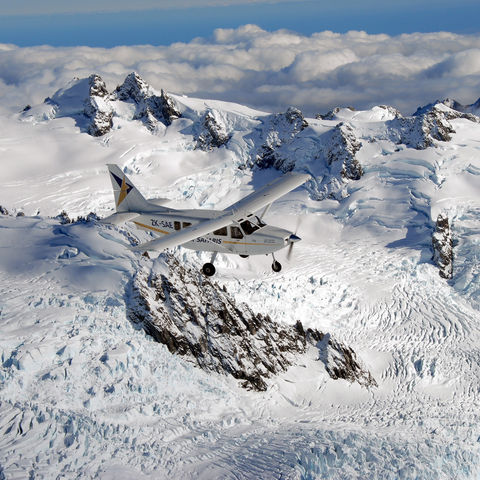
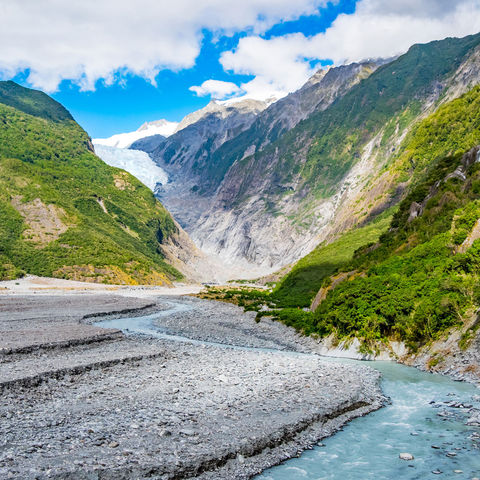
Wild and rugged, the West Coast of New Zealand’s South Island is best known for its twin glaciers of Franz Josef and Fox. Though the glaciers are retreating, they are still almost at sea level and the juxtaposition of rivers of ice surrounded by lush, temperate rainforest make them a highlight of the region. Heli-hikes and aerial sightseeing showcase the glaciers at their most spectacular.
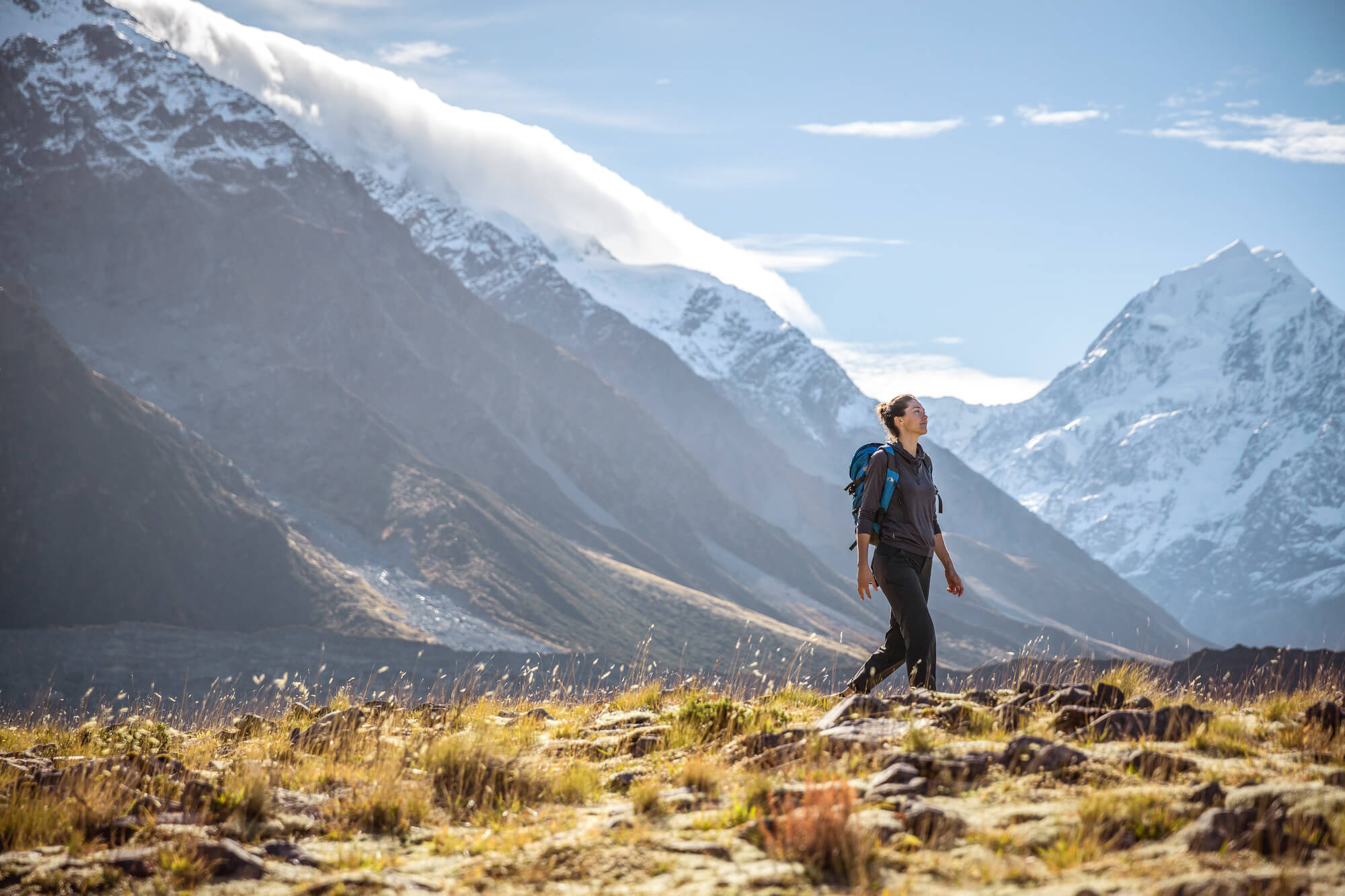
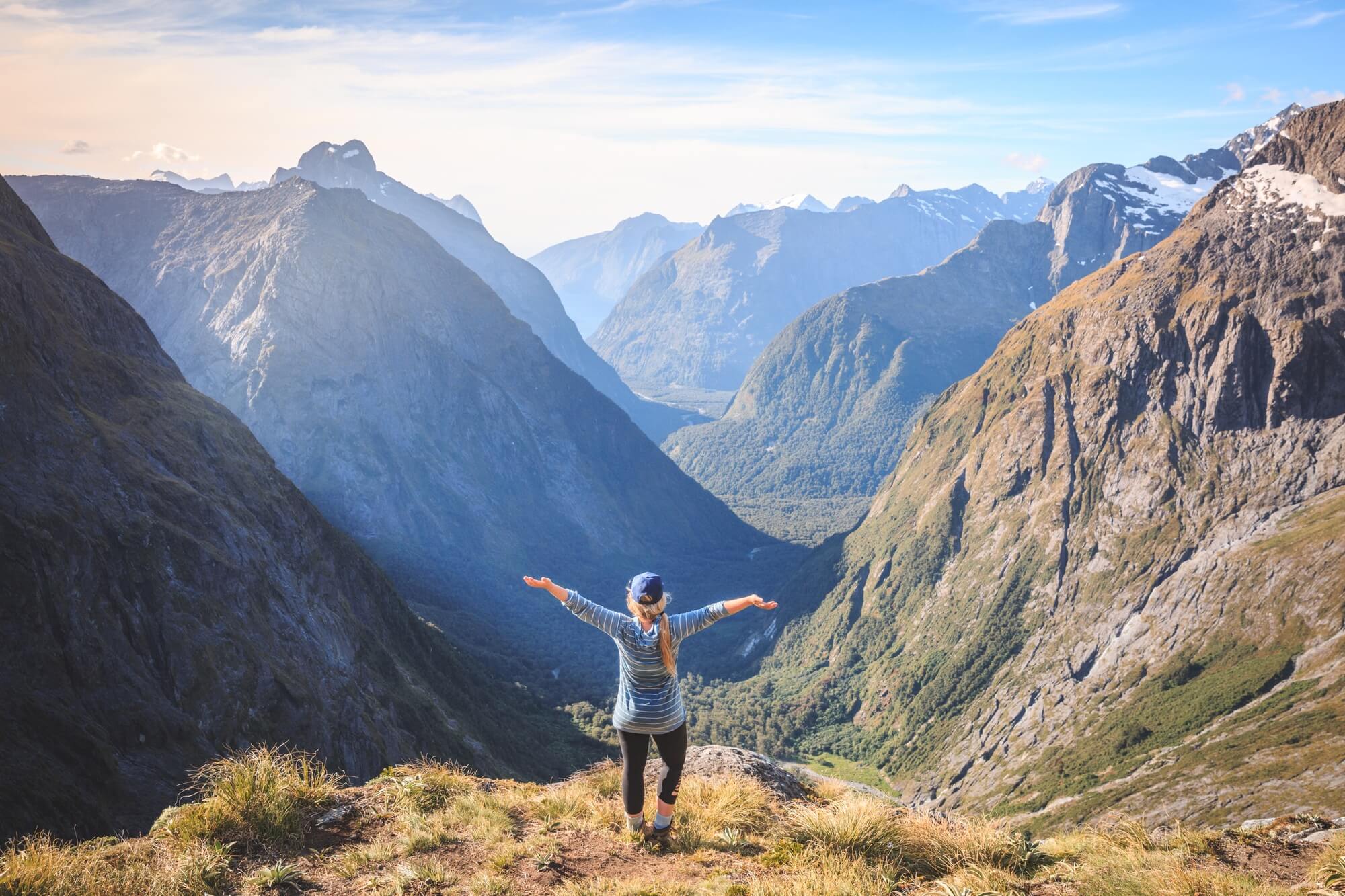
Heading inland, there are many other glaciers to be found along the island’s spectacular Southern Alps including Tasman glacier, the longest in NZ at 27 km. With views across Tasman Lake to Aoraki/Mount Cook, New Zealand’s highest peak, on a clear day the scenery is head-spinningly beautiful. This is the terrain that provided the training ground for a young Edmund Hillary before he conquered Everest. Less hardcore approaches include taking an iceberg cruise around the lake, following an easy 1-hour walking trail to a viewpoint or getting the ultimate view on a scenic flight.
Recommended holiday:
South Island Explorer – a dramatic self-drive experiencing the sweeping West Coast glaciers, majestic lakes, mountains of Queenstown and Fiordland National Park.
5. Patagonia
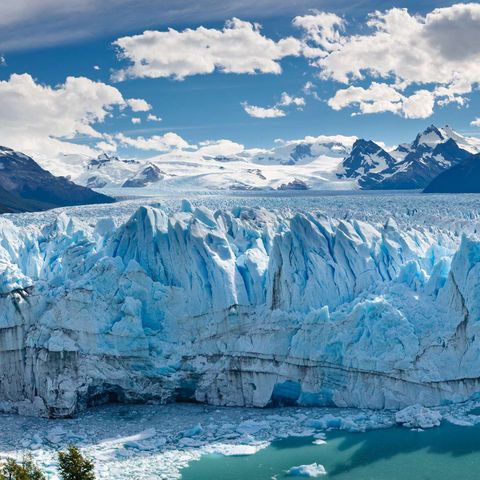
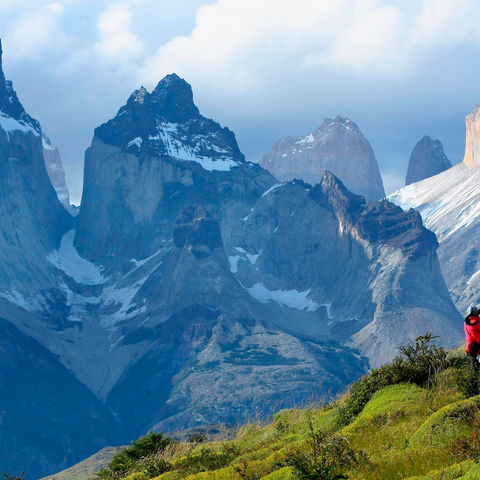
Imposing granite spires offset the glistening glaciers of Patagonia, a region which straddles the south of Chile and Argentina. These jaw-dropping landscapes would not exist if not for the awesome power of the region’s glaciers, which are some of the biggest and most spectacular on Earth. They fill the air with cracks and groans.
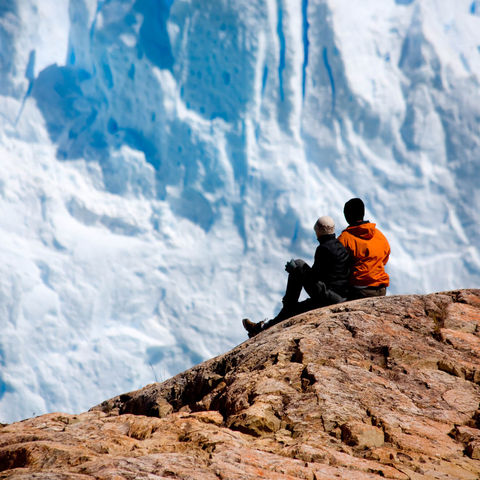
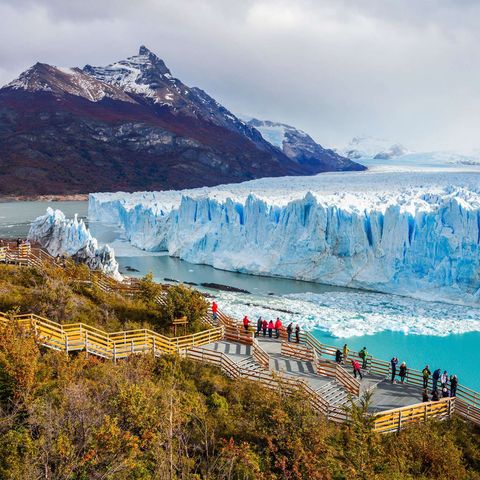
The immense Perito Moreno in Los Glaciares National Park, a UNESCO World Heritage site in Argentina, is arguably the most well-known. Visitors are treated to unforgettable views of the front and side flanks of this blue and white ice giant, and it remains dynamically stable even as many glaciers worldwide are retreating, with slabs of ice crashing into the lake below. It is also one of Patagonia’s most memorable spots for seeing calving glaciers.
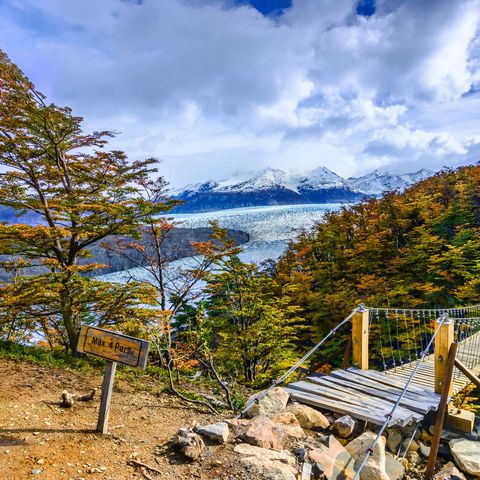
The Grey Glacier in Torres del Paine is also famous, and just as impressive. You can take a boat through the lake at its base to get an up-close look at this ancient monster. These two glaciers and many others are part of the huge Southern Patagonian Icefield, the second largest concentration of ice in the world besides the Poles.
And among all the ice and chiselled peaks, you can spot magellanic penguins, elephant seals, whales.
Visiting:
Visit Patagonia as an add-on to and Antarctic voyage and journey through picturesque lake districts, visiting Perito Moreno glacier and Torres del Paine.
6. Svalbard
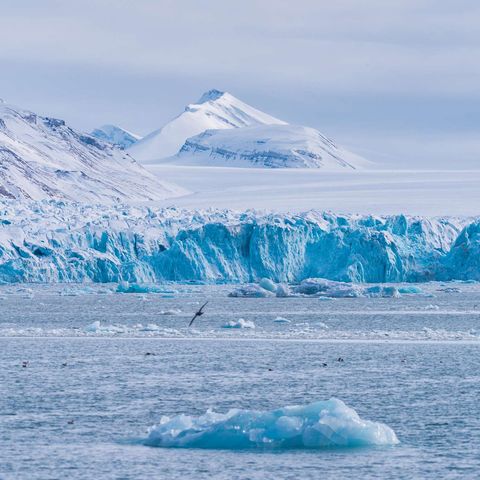
It is little surprise that the most immersive experience of glaciers is at the polar regions. Vast ice sheets produce enormous glacier fronts that calve gigantic icebergs in some of the most spellbinding scenery on earth.
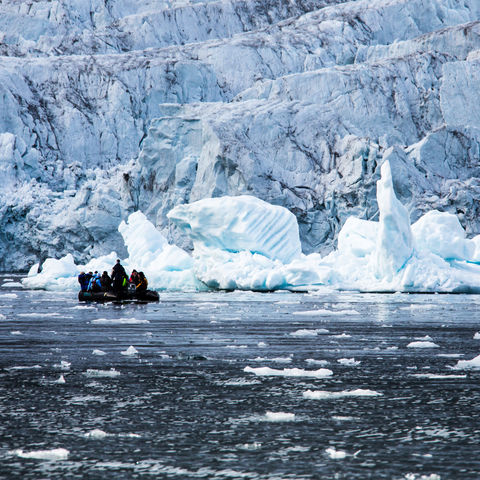
In the northwest of Spitsbergen in the Svalbard archipelago, the great 14th of July Glacier is truly epic. 16 km long, the face rises 30 metres from the sea in a textured wall of blue-white ice. Further to the north, the Monaco glacier is another mighty ice spectacle with a face around 7km long.
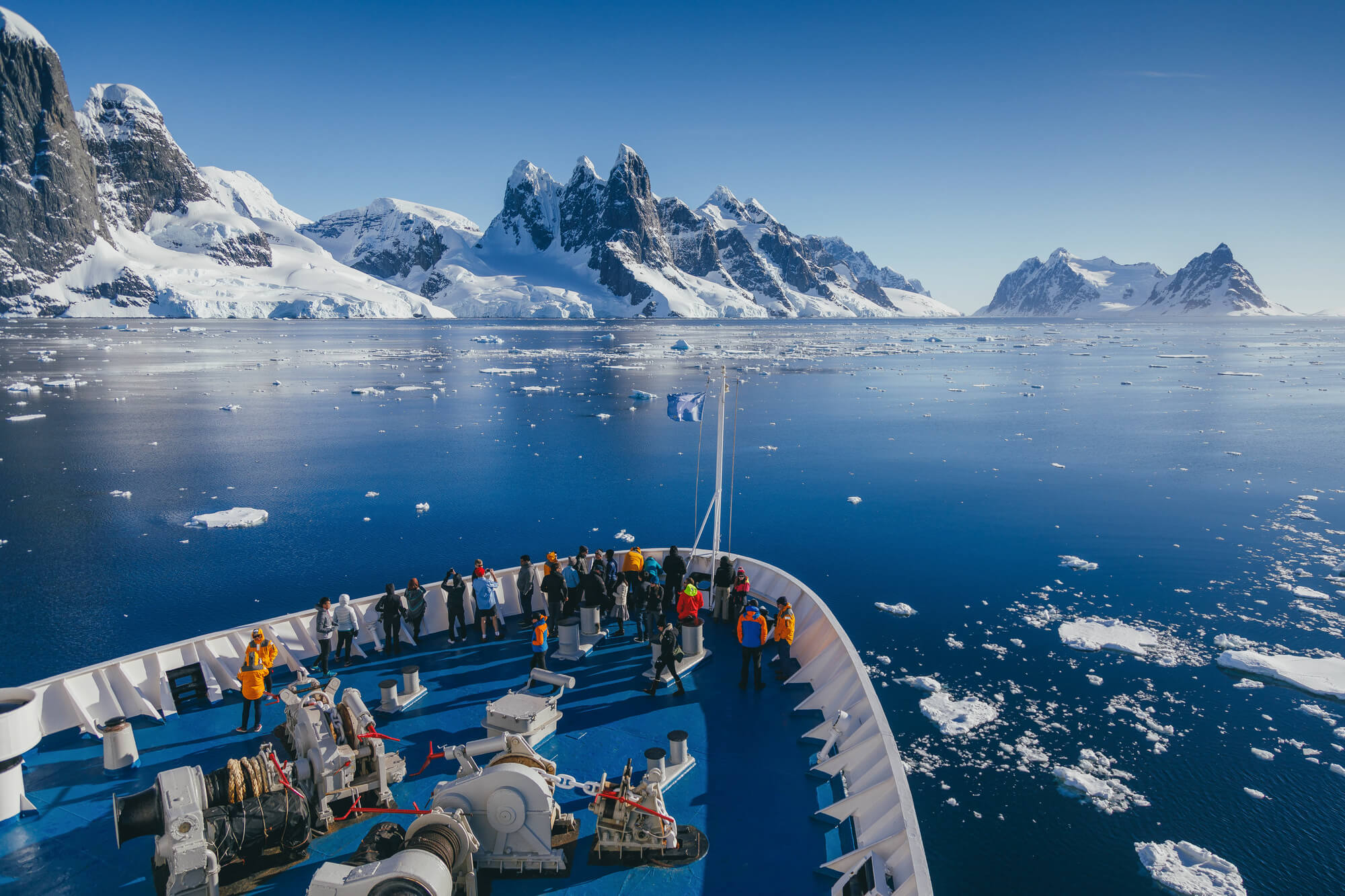
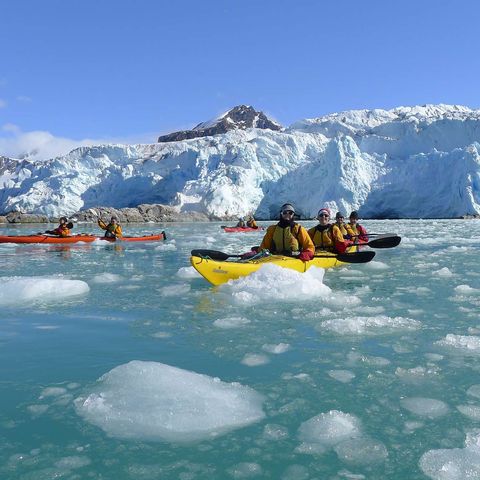
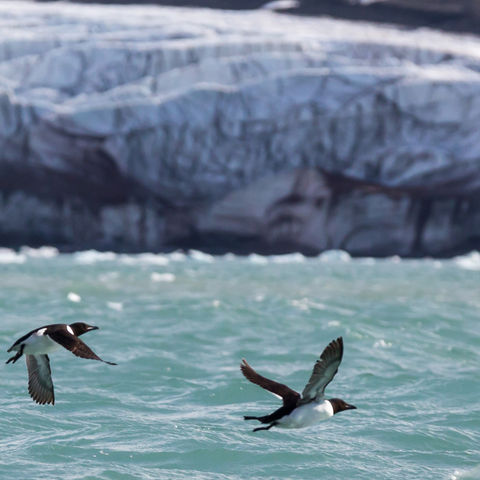
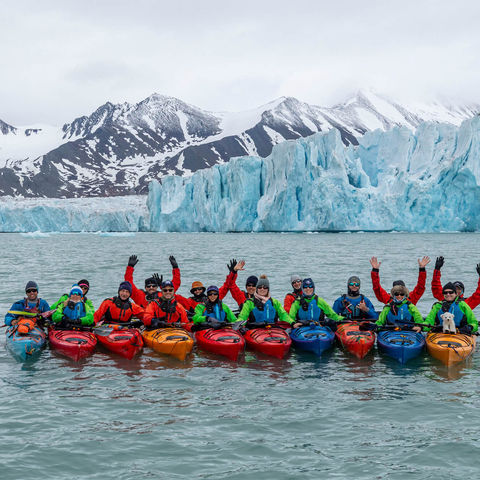
Small-ship expedition voyages immerse you into this glacial environment in the Arctic summer. There’s an incredible sense of awe about cruising along the face of a glacier in this remote and pristine environment. Watching seabirds and perhaps seals resting on icebergs. Silence is punctuated by creaking ice and bird calls. Strict safety protocols require ships and zodiacs to remain at least 200m from these ice giants.
Recommended holiday:
Around Spitsbergen – enjoy the complete Spitsbergen experience on this thrilling expedition cruise, visiting the Svalbard archipelago’s largest island. Expect memorable wildlife encounters and excellent photo opportunities throughout.
7. Greenland
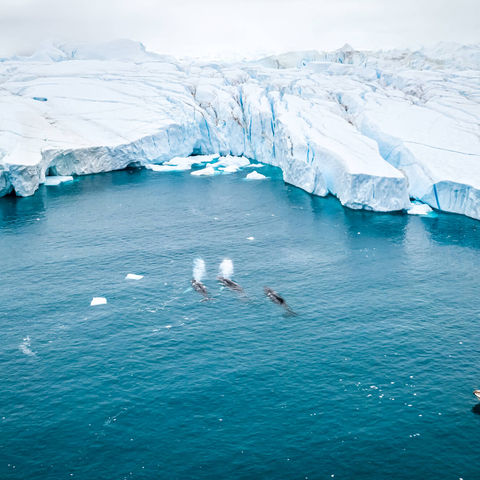
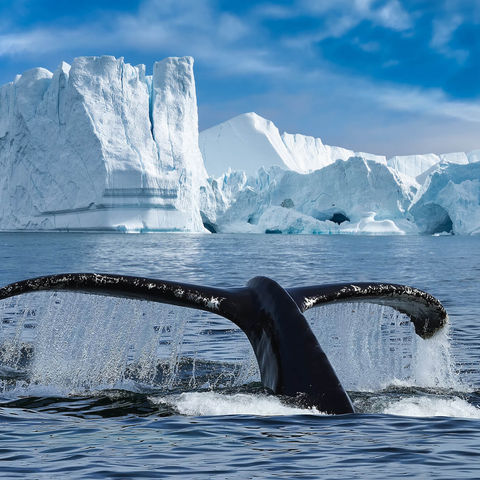
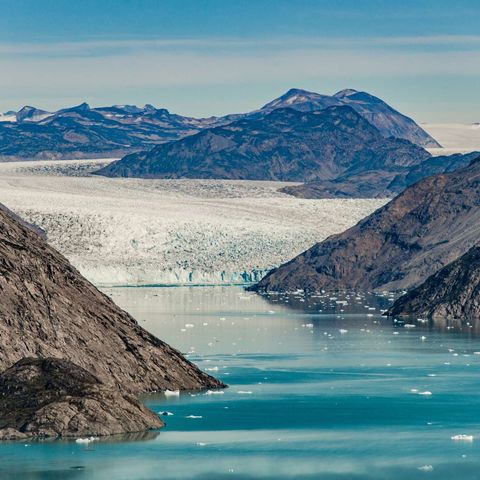
The scale of ice in Greenland is off the charts. Here, the world’s second largest icecap dominates the world’s largest island.
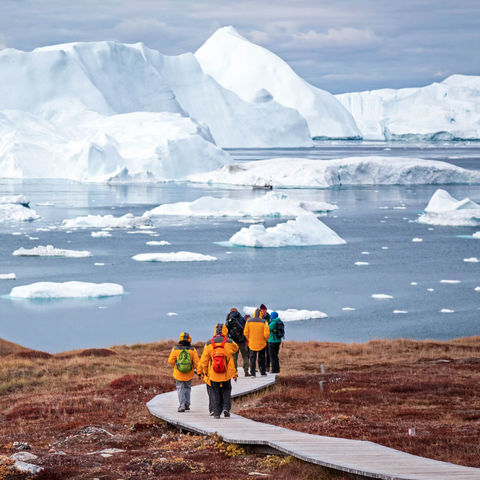
The town of Ilulissat sits in the acclaimed Disko Bay region of West Greenland beside one of the most productive glaciers in the world. Jakobshavn Glacier, known locally as Sermeq Kujalleq feeds gigantic icebergs into the Ilulissat Icefjord, a UNESCO World Heritage-listed wonder. Some of these icebergs can be several kilometers in length and, eroded by the elements, assume weird and wonderful shapes. It is photographic heaven.

Recommended holiday:
Essential West Greenland – This flexible trip based in Ilulissat lets you explore through your choice of optional excursions. Cruise the ice-choked fjords of Dsko Bay, visit the informative Icefjord Centre and perhaps enjoy a coffee with the locals.
Planning your trip
If you’re feeling inspired to witness the majesty of glaciers, get in touch with our travel specialists to chat through where you’d like to go and when. They will tailor a trip to suit you. Get in touch on 01737 214 250 or send an enquiry.