









Skip to content
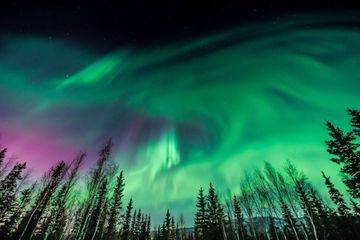
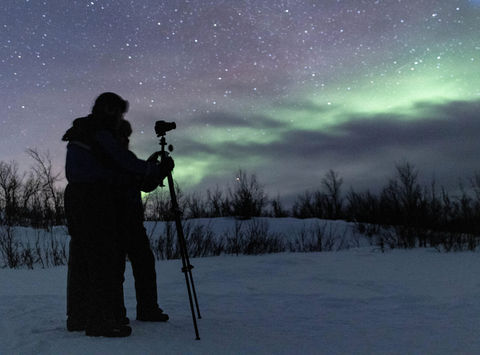
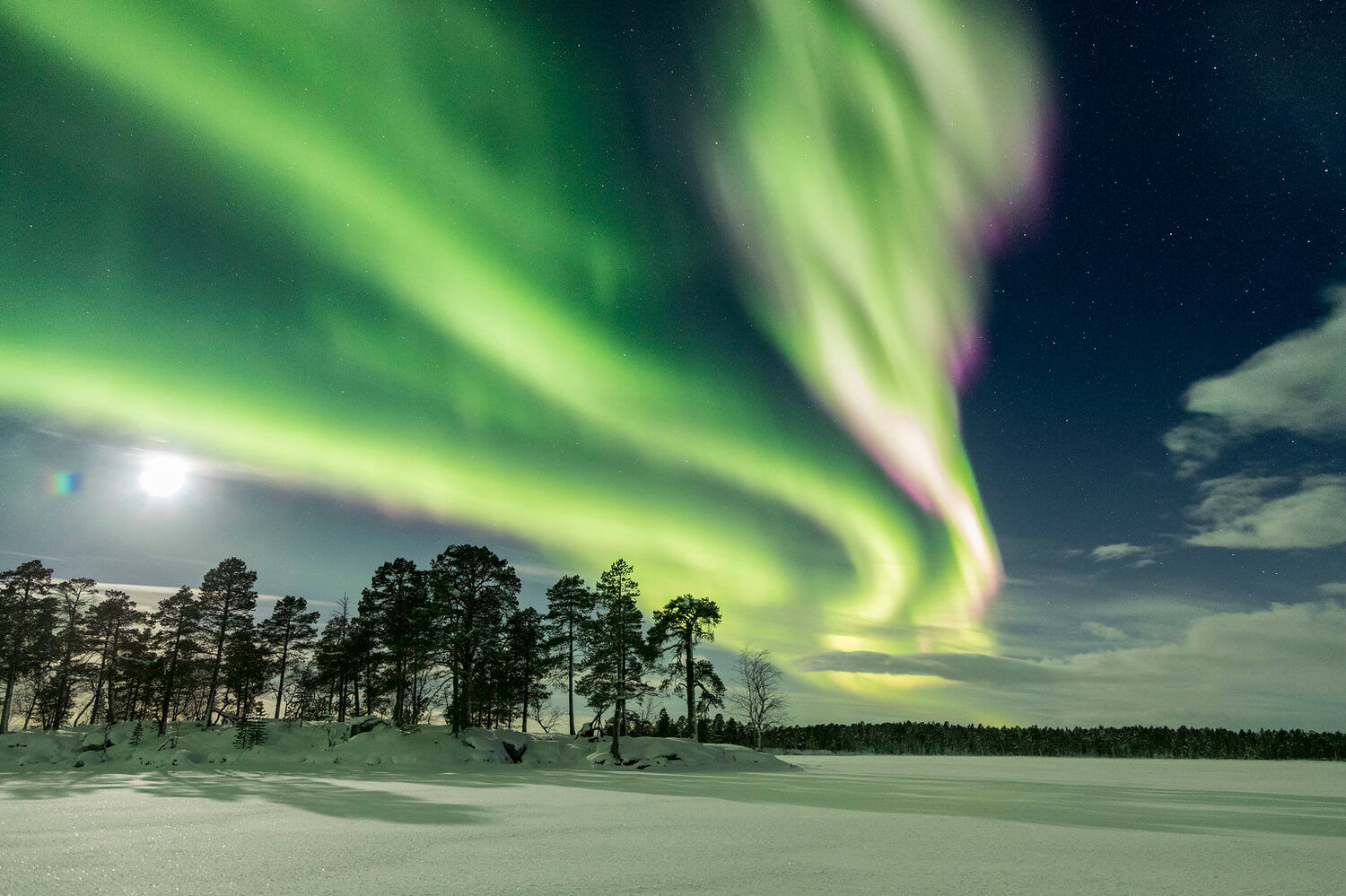
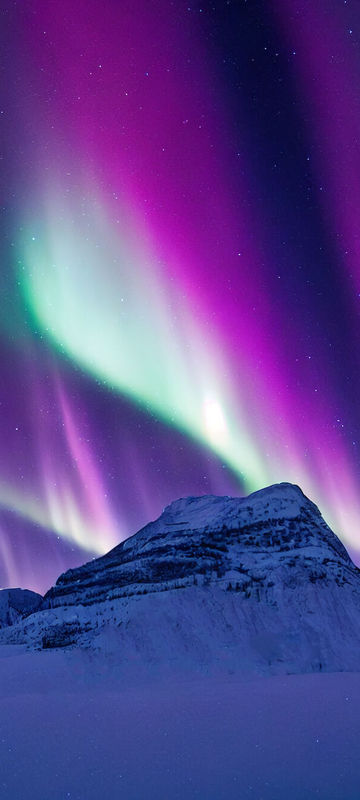
Green and purple aurora light the sky in Lapland

Colours and shapes of the aurora borealis

Overview

We’re often asked which colours of aurora you might see and why are they different. With that in mind, we’ve compiled this concise guide explaining the form the northern lights take.

A clash of the protons

When solar particles from the sun reach our atmosphere, most are deflected away, but some supercharged electrons and protons sneak in. Imagine this atomic process, happening to billions of atoms stretching hundreds of kilometres into the atmosphere – that’s what creates the gentle, moving light of the aurora borealis.

Sometimes it’s delicate and subtle – strands of phosphorescent green flirting with the stars – or you might see the aurora turned up to max, almost like a glowing vortex swirling overhead.

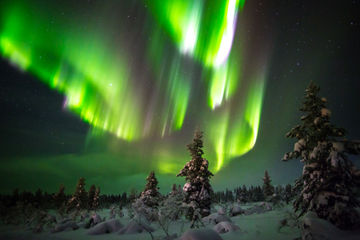
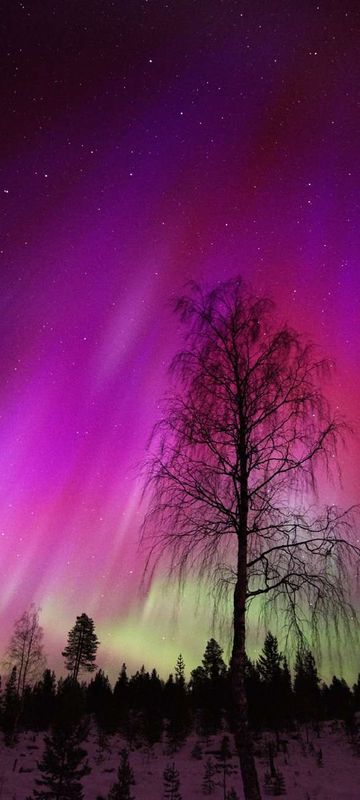
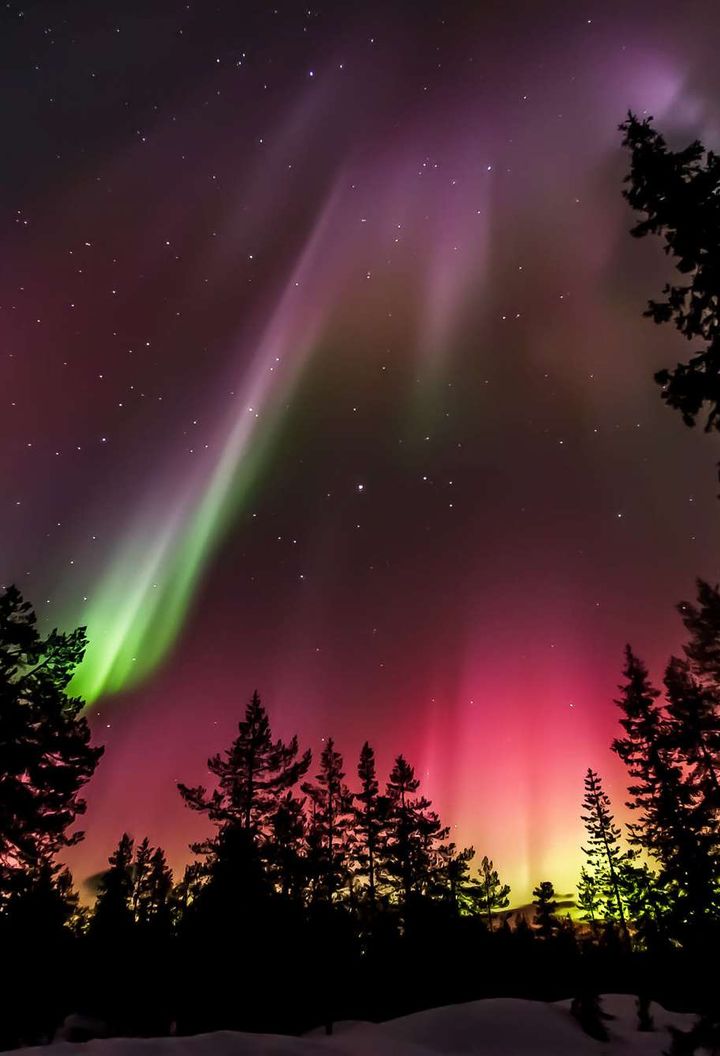
Multi-coloured display of the aurora borealis in Finland

Aurora colours

The different colours depend on two main factors: what type of element is reacting with the solar particles and what altitude the activity is taking place. If you’re watching a green aurora, that’s light, or photons, being given off by oxygen around 100-150km up. It becomes red light if the action is taking place higher… at 200-250km.

If you see blue, pink or violet colours, that’s from nitrogen molecules. A pinky-crimson colour is from hydrogen – usually lower in the atmosphere, so you sometimes see this at the bottom of a green band.

White lights occur when all the colours mix or if the aurora is very dim. In the latter instance, you might glimpse white wisps that you hope are northern lights and it’s only when you take a photograph the colour is revealed. Most successful aurora hunters witness a display of green lights. It is rarer to see yellow and red aurora, or even multi-coloured.
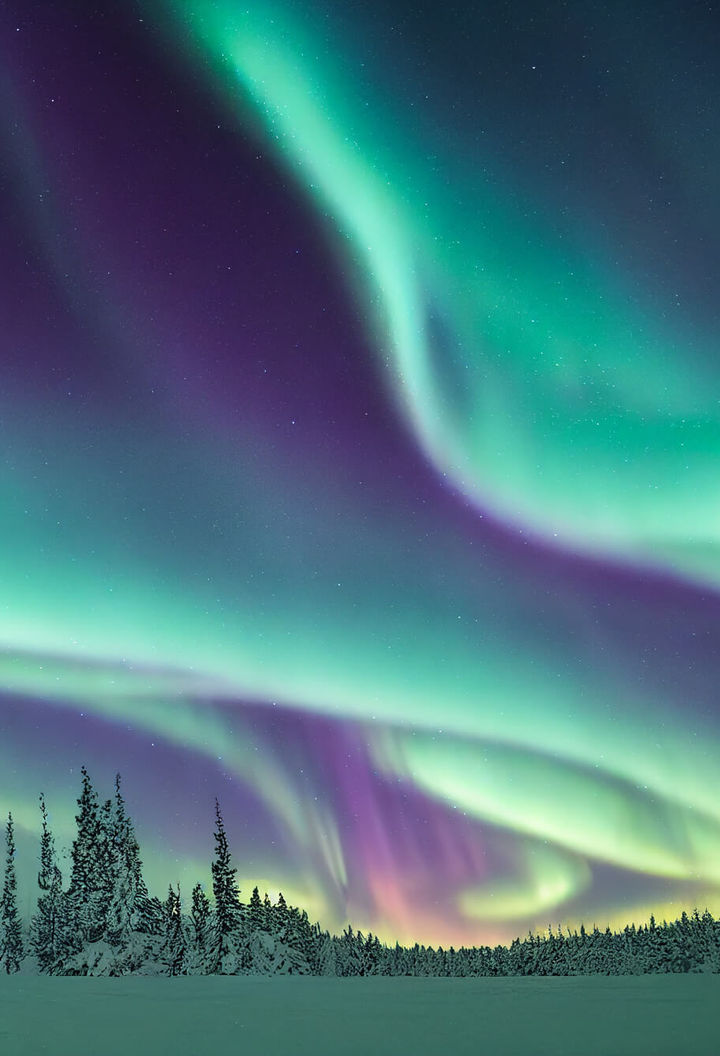
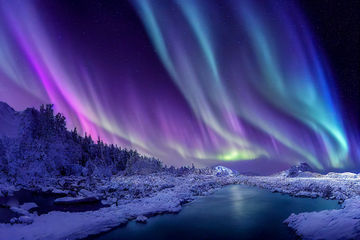
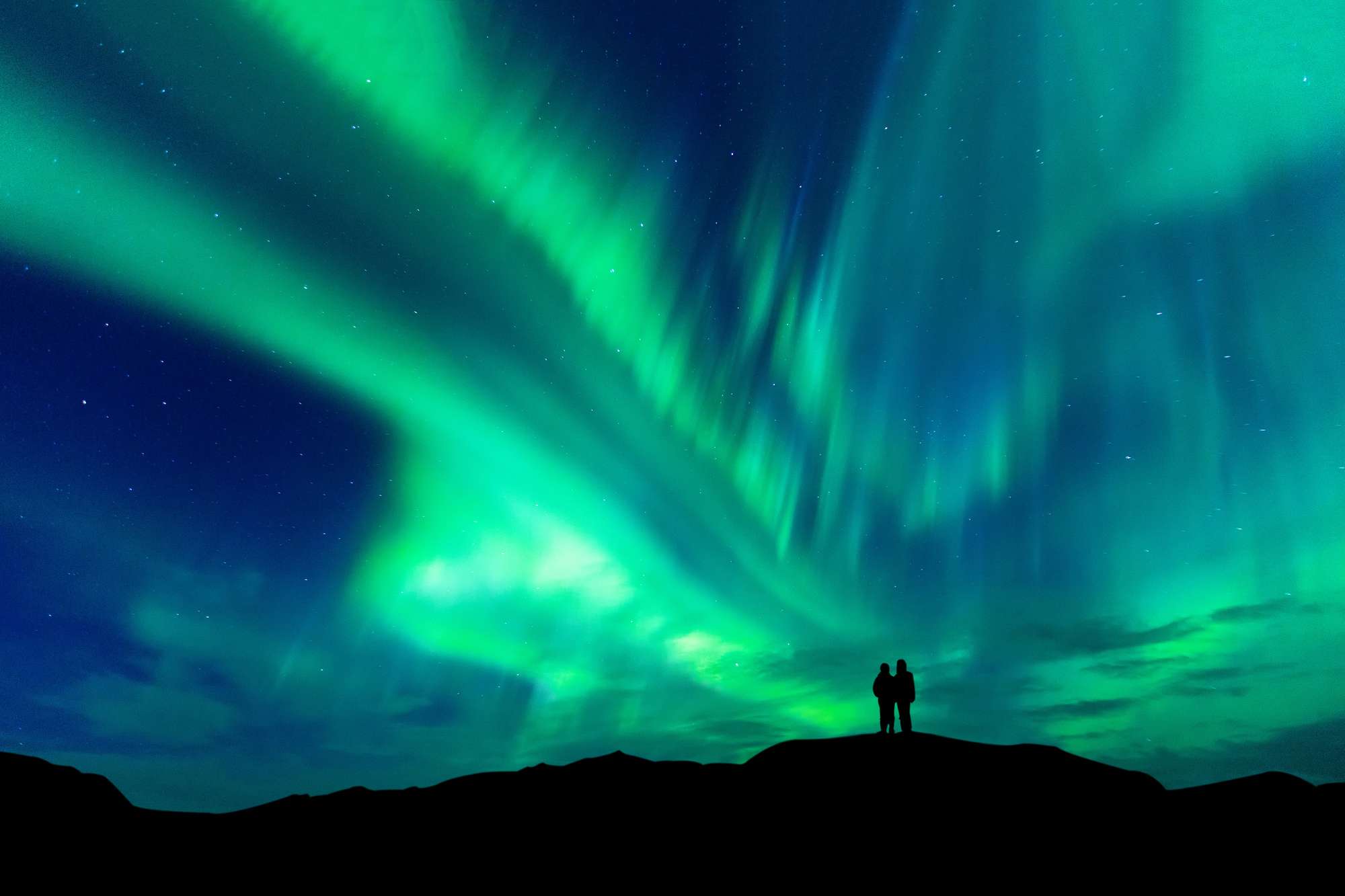
Swirling shaped aurora in colours of green and purple over a winter forest in Lapland

Different shapes of the northern lights

The aurora is essentially plasma – an electrically charged gas – so it’s constantly changing, unpredictable, chaotic, erratic…

There are all kinds of fiendish physics to explain the various forms and shapes, but a lot depends on where the activity is happening relative to where you’re standing.

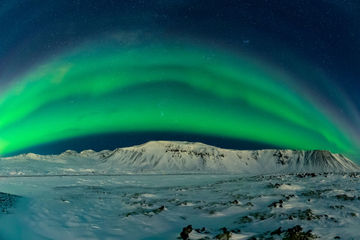
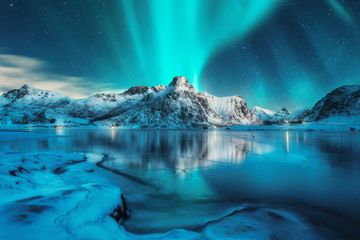
An aurora viewed from a distance, for example, might look like giant, swaying curtains.

But were you to look up at the same aurora from directly below, it might take on the appearance of a corona – rays of light converging to a point. Same aurora, different perspective. It’s a bit like viewing a city of skyscrapers from a distance, then walking along the streets and looking up at the same buildings.