Skip to content

9 of the Best Nova Scotia Experiences

One of Eastern Canada’s Maritime Provinces, Nova Scotia is almost completely surrounded by sea. It has an island feel – indeed Cape Breton in the east of the province is an island – with over 13,000km of coastline and more than its share of beautiful beaches and candy-striped lighthouses. Fresh seafood – particularly lobster, scallops and mussels – are a definite highlight, and you could spend days sampling its artisan craft studios, live music venues and enticing eateries.

Whether you focus your visit on Nova Scotia alone or blend with the neighbouring Maritimes provinces, we think the following nine experiences should be factored into your itinerary.

1. Drive the Cabot Trail

Right up there with some of the world’s greatest coastal drives, this 298km route hugs a wild peninsula on Cape Breton Island in the far northeast of Nova Scotia. As well as breathtaking viewpoints overlooking the Gulf of St Lawrence, the Cabot Trail is full of hiking potential with over two dozen trails of varying length and difficulty.

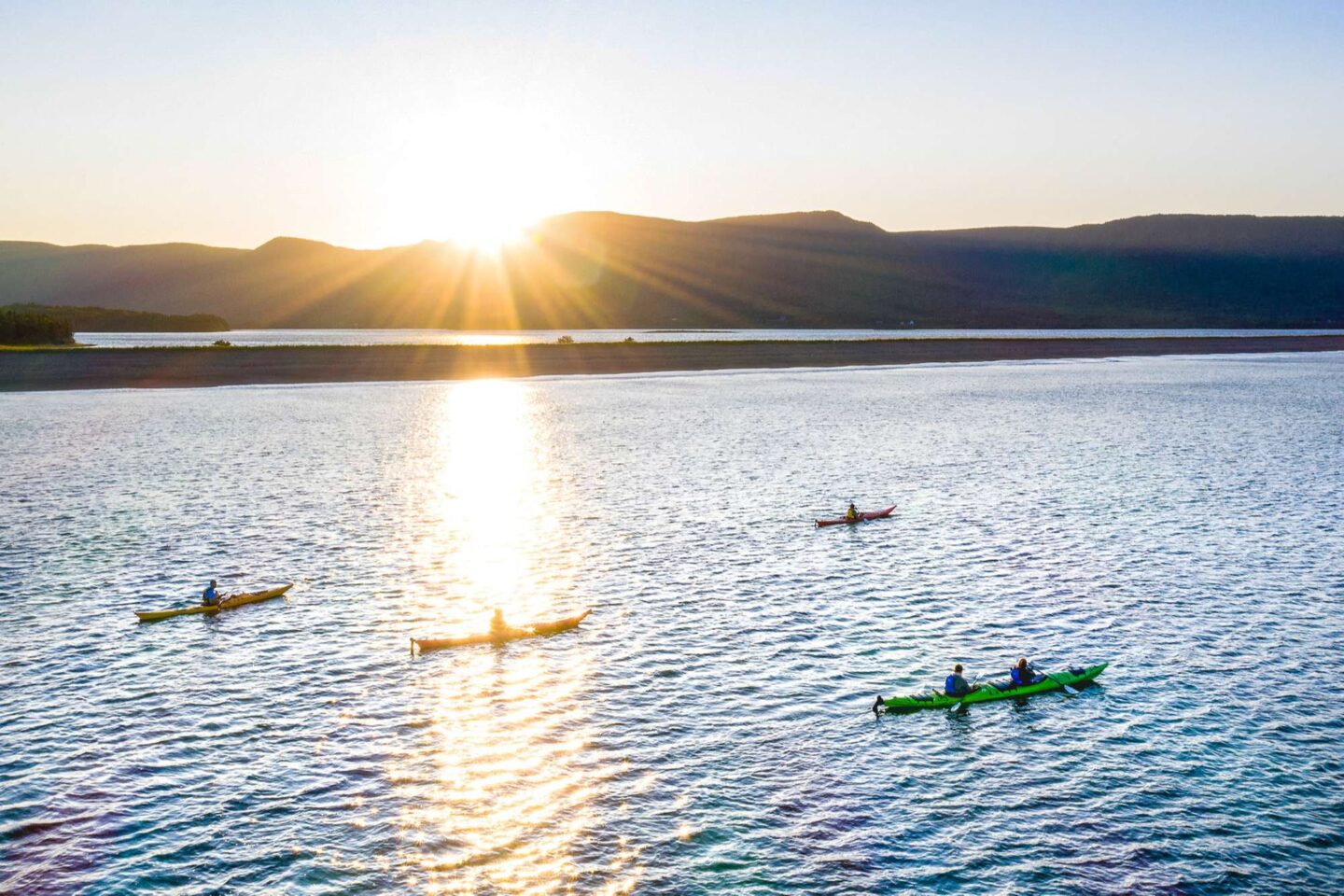
You can also go kayaking or whale watching and ride the gondola to the top of Smokey Mountain for views out to the Atlantic Ocean, but the Cabot Trail has plenty of cultural diversions too. The charming town of Baddeck was once the home of Alexander Graham Bell and the National Historic Site in his honour is an celebration of his innovation and creativity. At Glenora, there is a famous distillery where you can sample North America’s first single malt whisky. The trail links numerous fishing villages, their harbours crammed with colourful boats. Seafood restaurants and artists’ studios reflect the region’s vibrant maritime traditions, while the Celtic Music Interpretive Center and Acadian Cultural Center & Museum provide fascinating insights into Nova Scotia’s heritage.

Drive the Cabot Trail in autumn and witness the vibrant colours of the season brandished across the landscape. As travel specialist Rosie notes, “these striking shades of red and orange align perfectly with the Celtic Colours Festival, an annual 10-day music event showcasing Cape Breton Island’s living culture. The focus is on Celtic music, so you will be sure to enjoy tapping your foot to a fiddler or two!”

Discover more in Your Complete Guide to Nova Scotia’s Cabot Trail >

2. Discover the history of Halifax

Museums, boutique shops and restaurants line a boardwalk that stretches nearly 4km along the Halifax Waterfront. It’s a great spot to soak up the atmosphere of Nova Scotia’s capital, particularly on a sunny day, whether you’re looking to grab a bite, watch boats come and go or simply take five on the colourful Adirondack chairs that appear intermittently along the water front.

Commanding a hilltop in the heart of the city, the star-shaped Citadel was completed in 1856 – although its origins date back to 1749 when the British military established a guardhouse to defend the harbour. Guided tours bring the history of the fort to life. A cannon is fired daily at noon by the 3rd Brigade Royal Artillery, while the sentry guard of the 78th Highlanders is changed at the front gate every hour.

Halifax is clearly a city that embraces its diverse history, and colourful stories abound particularly around the main industry on which the city was built – fishing. Fishermen would go out at sea for weeks at a time, whatever the weather. To help keep them warm, their wives would knit them gloves dyed blue. When the fishermen rubbed their noses in the cold, the dye would transfer onto the tip and hence ‘bluenose’ frequently crops up in the names of local businesses.

3. Explore Old Town Lunenburg

It’s not surprising that this historic port, located about 100km southwest of Halifax, has been declared a UNESCO World Heritage Site – most of the colourful wooden buildings along its waterfront date from the settler years of the 1800s. For the iconic view of the waterfront building head out of old town along residential Tannery Road where you can look back across harbour.

The Knaut-Rhuland House museum shines a light on their lives, while the Fisheries Museum of the Atlantic delves into Lunenburg’s maritime past. Built in 1921 and immortalised on the Canadian dime, the Bluenose was once the world’s fastest racing schooner – you can now take a trip on the replica Bluenose II, the most iconic of the vessels moored in Lunenburg and happy in the knowledge of why it is named as such.

There’s a genuine bygone feel to Lunenburg from the traditional guesthouses to the artisan craft shops and galleries. There’s a wealth of restaurants to choose from, with seafood the main specialism. And don’t forget to pop into the Ironworks Distillery to pick up a bottle of local rum.

4. Hike the Cape Breton Highlands

canada hikers skyline trail cape breton highlands national park nstb

Around 950 square kilometres in size, this rugged national park of sea cliffs, beaches, river canyons and forested valleys is riddled with no fewer than 26 trails, many of them easy hikes. One moment you could be walking through Acadian or boreal forest (home to black bear, moose and lynx); the next you could be striding across a dramatic headland, catching glimpses of pilot whales in the sea below.

Graded ‘Easy’, the Skyline Trail is one of the most popular revealing stunning views out to the Gulf of St Lawrence and across the winding Cabot Trail as the path reaches its climax. Here a stepped boardwalk extends down the headland with multiple seating areas incorporated where you can perch and take a moment. It’s about a 4-5-mile return hike depending on which route you take. Ensure your camera is fully charged.
Note, during the peak summer period a parking reservation system is in place, so planning is essential.

Other popular hikes include the 7km Franey Trail near Ingonish Beach, the 4.5km Middle Head Trail (which straddles a narrow peninsula) and the 9.5km Acadian Trail, a forest hike accessed from the western side of the Cabot Trail.

5. Witness the world’s highest tides

Bordered by Nova Scotia to the south and New Brunswick to the north, the Bay of Fundy has many claims to fame – including superb whale watching (see no. 6). Twice a day, the 280km long inlet empties and fills a billion tonnes of water during each tidal cycle, creating the world’s highest tides of up to 16m. The most extreme tidal ranges occur at the head of the bay. Joggins is a good spot – not only can you walk on the ocean floor at low tide, but the cliffs here are a world heritage site for fossils.

Part of the same phenomenon, you can also witness a tidal bore along Salmon River at Truro if you time it right. Short and strange, twice daily, tidal water rushes upriver like someone pressed rewind.

6. Spot humpbacks and other whales

Up to 12 species of cetacean can be found in the Bay of Fundy during summer – the powerful tides stir things up, creating nutrient-rich waters full of krill, squid and herring. Humpback whales and white-sided dolphins arrive in June, but from mid-July to October you also stand a good chance of seeing minke and fin whales. Keep your eyes peeled for endangered North Atlantic right whales, as well as sei and pilot whales. If you’re lucky, you might also spot blue and sperm whales, orca and beluga.

Head out into the bay by rib boat from Brier Island off the tip of Nigby’s Neck for a visceral whale watching experience.

7. Visit the iconic lighthouse at Peggy’s Cove

Perched on wave-scoured rocks near the picturesque lobster-fishing village of Peggy’s Cove, the Peggy’s Point Lighthouse is one of the most photographed spots in Nova Scotia. Built in 1915, the lighthouse is 15m tall and octagonal in shape. If you visit just one of Nova Scotia’s 160 lighthouses, make sure it’s this one.

Around 40km south-west of Halifax, it’s a popular spot and can be busy. Don’t rush it. Take your time to meander around the village, perhaps grab a snack in the Sou’Wester café and wait for a quiet moment.

8. Experience the wilderness of Kejimkujik

canada kayaking through kejimkujik national park tb

West of Halifax, the Kejimkujik National Park and National Historic Site is a mosaic of lush forests, meandering rivers and island-speckled lakes. The Mi’kmaq – the First Nations people indigenous to Canada’s Atlantic Provinces – canoed the waterways of Kejimkujik for thousands of years. You can follow in their wake, discovering intriguing stone carvings, or petroglyphs, along the shore. Hiking and biking trails also probe this watery wilderness.

You could spend several days exploring the wilderness of this national park, but it’s worth even a flying visit enroute from Nova Scotia’s south shore to the northern shore.

9. Time travel at the Fortress of Louisbourg

Presiding over the westernmost reaches of Nova Scotia, the Fortress of Louisbourg National Historic Site offers a window into French colonial settler life in the mid-1700s. A ‘living museum’ with cannons firing and French soldiers marching down the streets, you’ll enter a surreal time warp where you can meet local residents dressed in traditional garb as they bake bread, fire muskets, sip rum and sew lace.

Feeling inspired?

Our 10-night Atlantic Discovery self-drive holiday combines the highlights of Nova Scotia with neighbouring Prince Edward Island, while our two-week Maritimes Explorer adds New Brunswick into the mix as well. Both can be tailored to suit you, or you our Canada travel specialists can craft something entirely bespoke.

Browse our collection of Canada holidays in the Maritimes, get in touch on 01737 214 250, or send an enquiry to start planning your own Nova Scotia adventure.