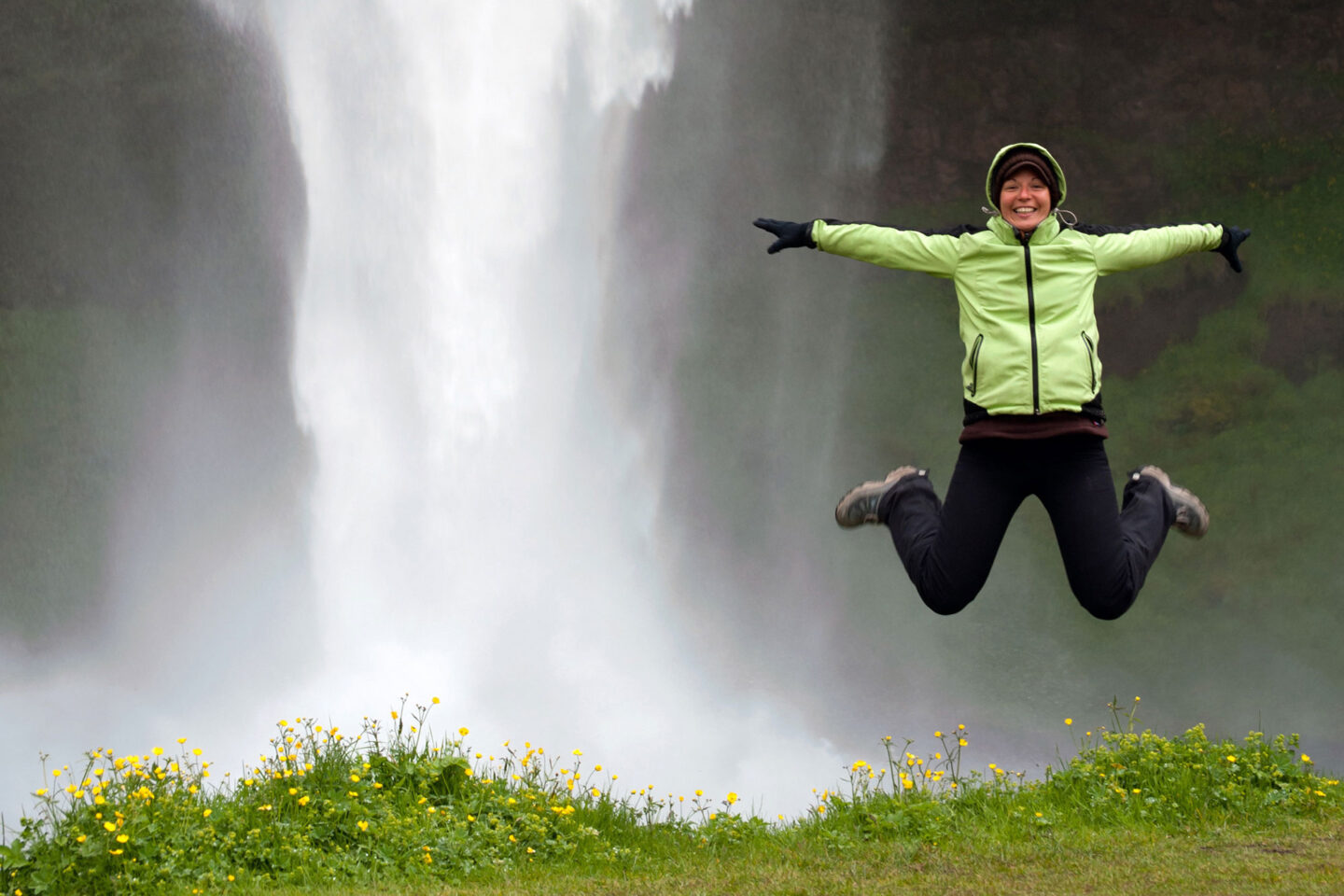

Nowhere in the world does waterfalls better than Iceland. It’s known as the Land of Fire of Ice, but in reality, it’s more like the Land of Fire, Ice and Crashing Water! A trip to Iceland is not complete without visiting one of the country’s incredible waterfalls, boasting no less than 30,000 cascades – there will be something for everyone. Each waterfall has its own tale and distinct character, representing the constantly changing landscape of Iceland.
Read on to discover who made the cut on our list of top 10 waterfalls in Iceland; the must-sees, the can not miss, the absolute best in the country!
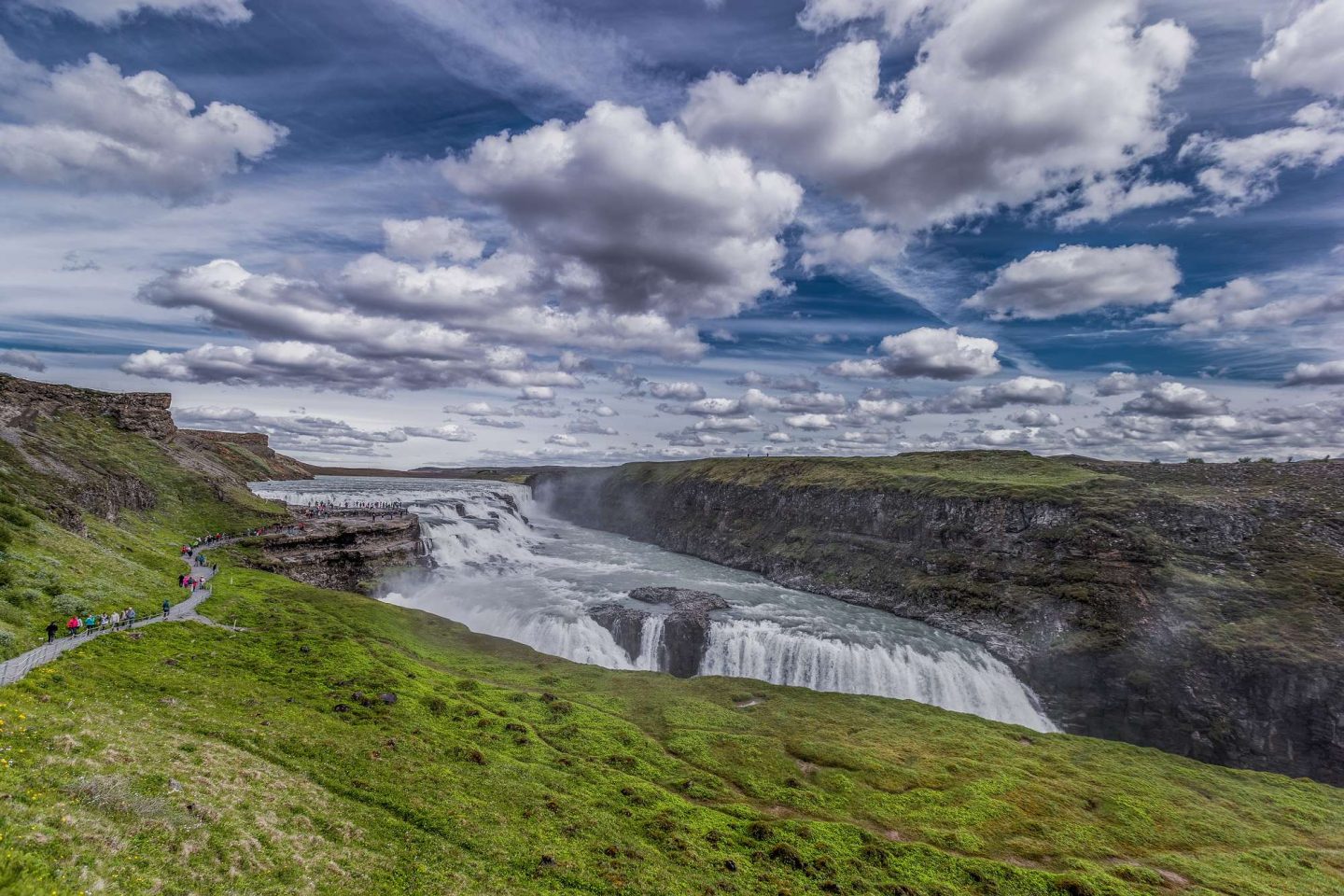

1. Gullfoss: Hvita, Southwest Iceland
Predictable choice? Perhaps… but there’s no denying that Iceland’s ‘Golden Falls’ regularly drowns the opposition when it comes to Europe’s most famous waterfalls.
This poster-pin-up is not only iconic, easily visited (as part of the Golden Circle route) and deservedly popular, but it is also strangely compelling. As you approach Gullfoss it seems like the ground simply swallows the Hvita River. It’s only when you reach the lip of a hidden canyon lying perpendicular to the waterfall that the full might of the 32m-tall, twin-tiered cascade strikes you.
Summer gives you full-volume meltwater-thunder, while winter (when it’s usually just as accessible) provides a mesmerising contrast between water in motion and water in freeze frame, the canyon encrusted with frost and ice.
See it for yourself on our 4-night Golden Circle Self-Drive
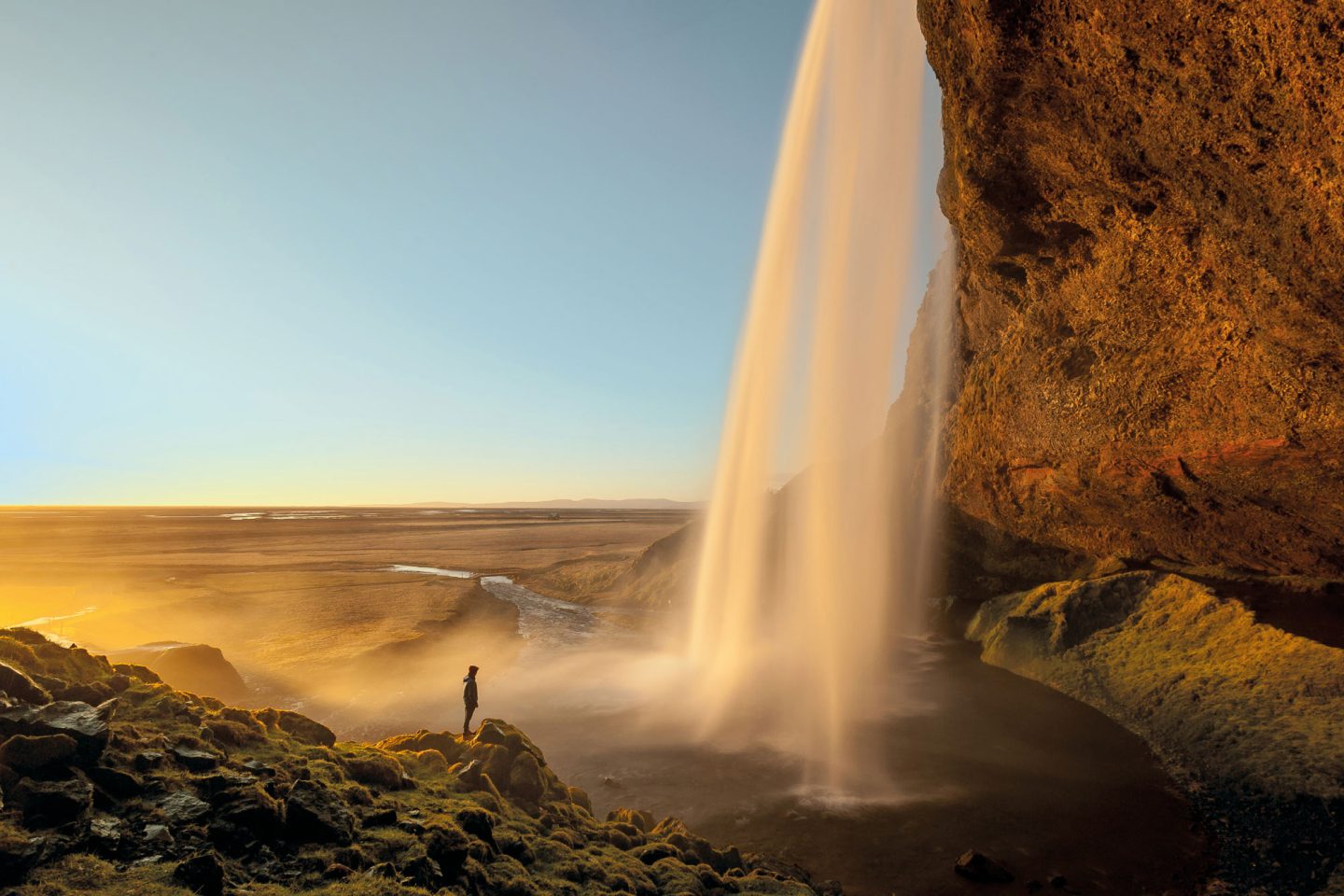

2. Seljalandsfoss: Seljalands River, South Iceland
Nourished by the Eyjafjallajokull icecap, this bridal-veil waterfall cascades 60m over a former sea cliff and conceals a mossy cavern that you can walk inside for misty-eyed views through the falls. In fact, it’s one of the very few Icelandic waterfalls that you can walk behind.
Take the time to explore it from every angle and you will be transfixed by the constantly changing interplay between light and water. Small wonder that Seljalandsfoss is every photographer’s favourite. Not wishing to steal its thunder, there’s a lesser-known but equally enigmatic waterfall a short drive away.
Shying away from the crowds at Seljalandsfoss, the wispy plumes of Gljufrafoss have carved a secret chamber hidden by cliffs. Squeeze through a gap and you will discover one of Iceland’s most enchanting waterfalls – and may even have it all to yourself.
See it for yourself on our 7-night Essential Iceland self-drive
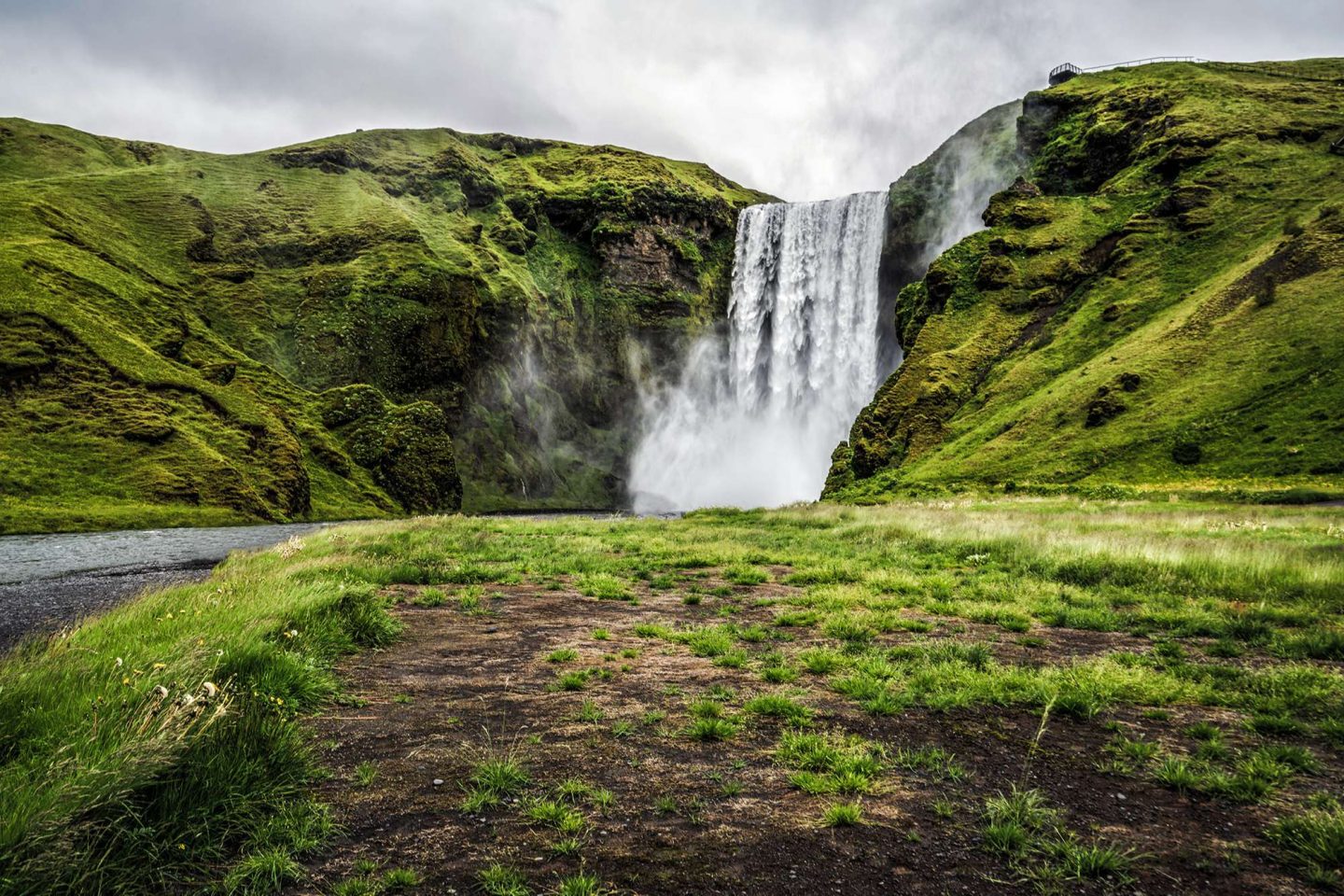

3. Skogafoss: Skoga River, South Iceland
This could well be the perfect waterfall: a neat rectangle of water – perfectly proportioned (60m high by 25m wide) and enough of it pouring over ancient sea cliffs for ‘steady thunder’ and those all-important mist-in-your-face moments. Skogafoss is also a reliable rainbow-maker. Sometimes a double rainbow shimmers above the seething plunge pool at the base of the falls. And believe it or not, there could even be a pot of gold – legend has it that Icelandic settler Thrasi Thorolfsson stashed his cash in a cave behind the waterfall. Don’t try to find it. The views of Skogafoss – both from the foot of the falls or from the viewing platform near its lip – are reward enough.
Like nearby Seljalandsfoss, Skogafoss is easily accessible from the Ring Road while touring the South Coast. Linger in the settlement of Skogar and you’ll discover a fascinating folk museum.
See it for yourself on our 3-night Summer Nights at Ranga self-drive
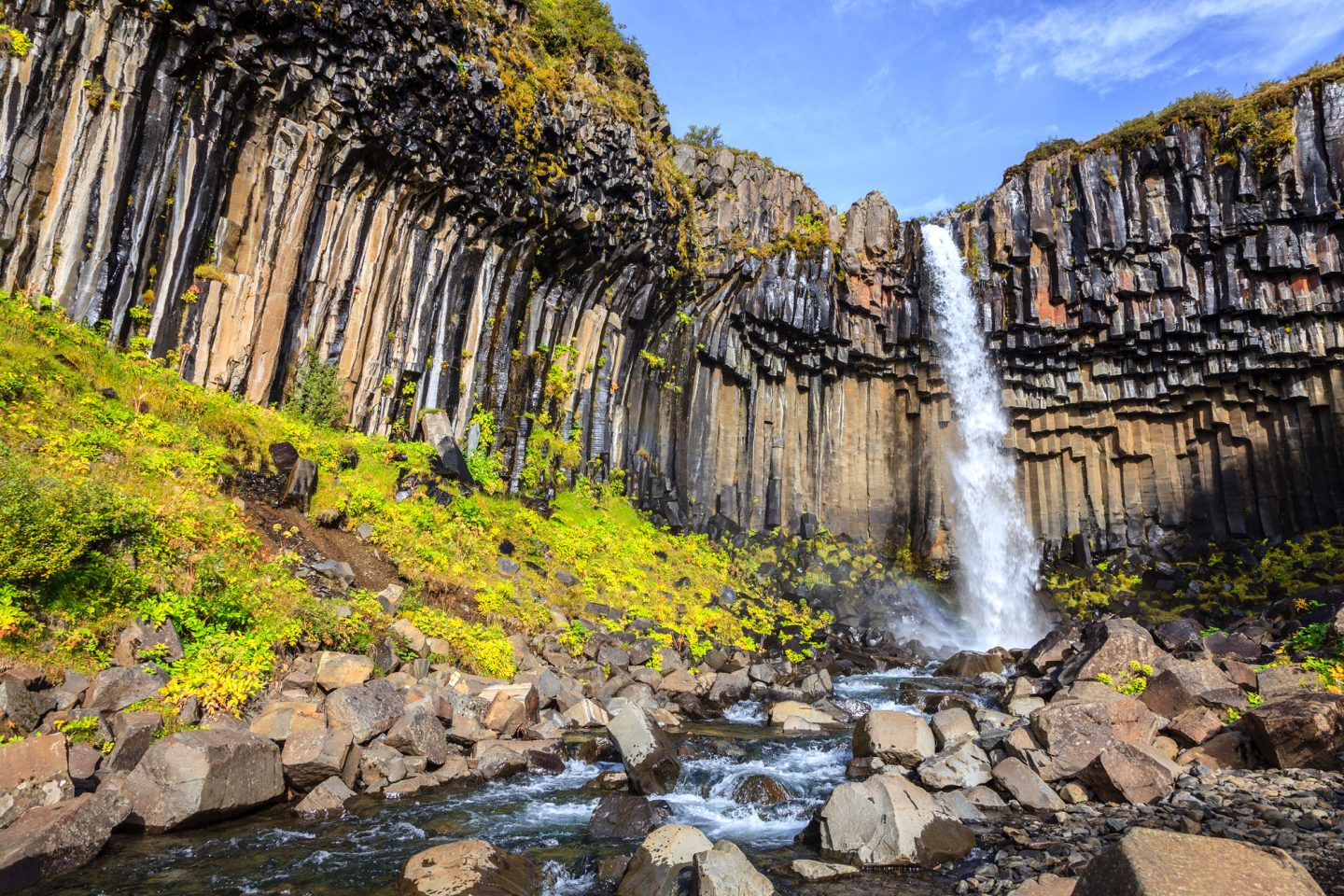

4. Svartifoss: Skaftafell, Vatnajokull National Park, South Iceland
Some Icelandic waterfalls get you gushing superlatives due to their size, the number of tiers, or the fact you can walk right up to them. Others simply find themselves incredible settings. Take Svartifoss for example. It’s not big. It doesn’t make the ground tremble. It doesn’t even bother with rainbows. Instead, this modest 20m-tall horsetail plume has picked a prime spot in an amphitheatre of hexagonal basalt columns.
Svartifoss commands an almost cathedral-like sense of awe – and it’s perhaps no coincidence that Guthjon Samuelsson, the architect of Reykjavik’s striking Hallgrimskirkja cathedral, sought inspiration here. Make the pilgrimage to this revered waterfall at Skaftafell, the gateway to the Vatnajokull National Park. From the visitor centre, an easy two-hour round-trip walking trail features head-spinning views of the falls.
See it for yourself on our: 10-night National Parks & Natural Wonders self-drive
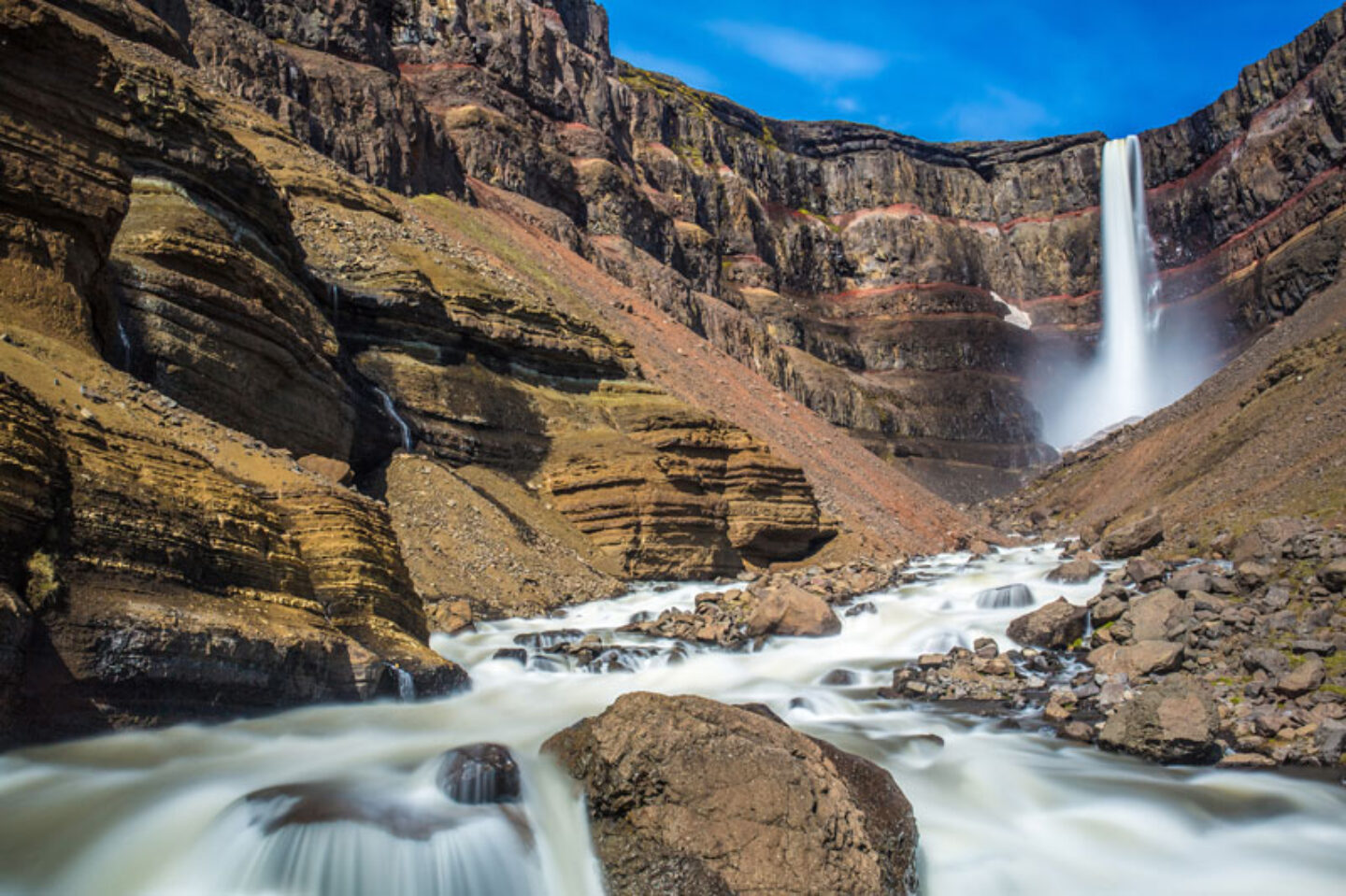

5. Hengifoss: Near Egilsstadir, East Iceland
Until recently, 128m-tall Hengifoss was ranked Iceland’s third tallest waterfall. Mighty Morsarfoss (see no.10) doused those aspirations and now the World Waterfall Database currently places Hengifoss just inside Iceland’s 10 highest waterfalls. Statistics mean very little, however, when you begin the one-hour walk to this imposing cataract.
Pouring over red and black humbug-striped cliffs on the very brink of the Highlands, Hengifoss has the same sense of majesty as Angel Falls in Venezuela – a long, narrow plume of water trailing from a remote plateau. The steady climb to its base passes a second, smaller cascade – Litlanesfoss – squeezed between striking outcrops of columnar basalt similar to those found at Svartifoss (see no.4). Two waterfalls for the price of one.
See it for yourself on our 14-night Highlands and Lowlands self-drive holiday
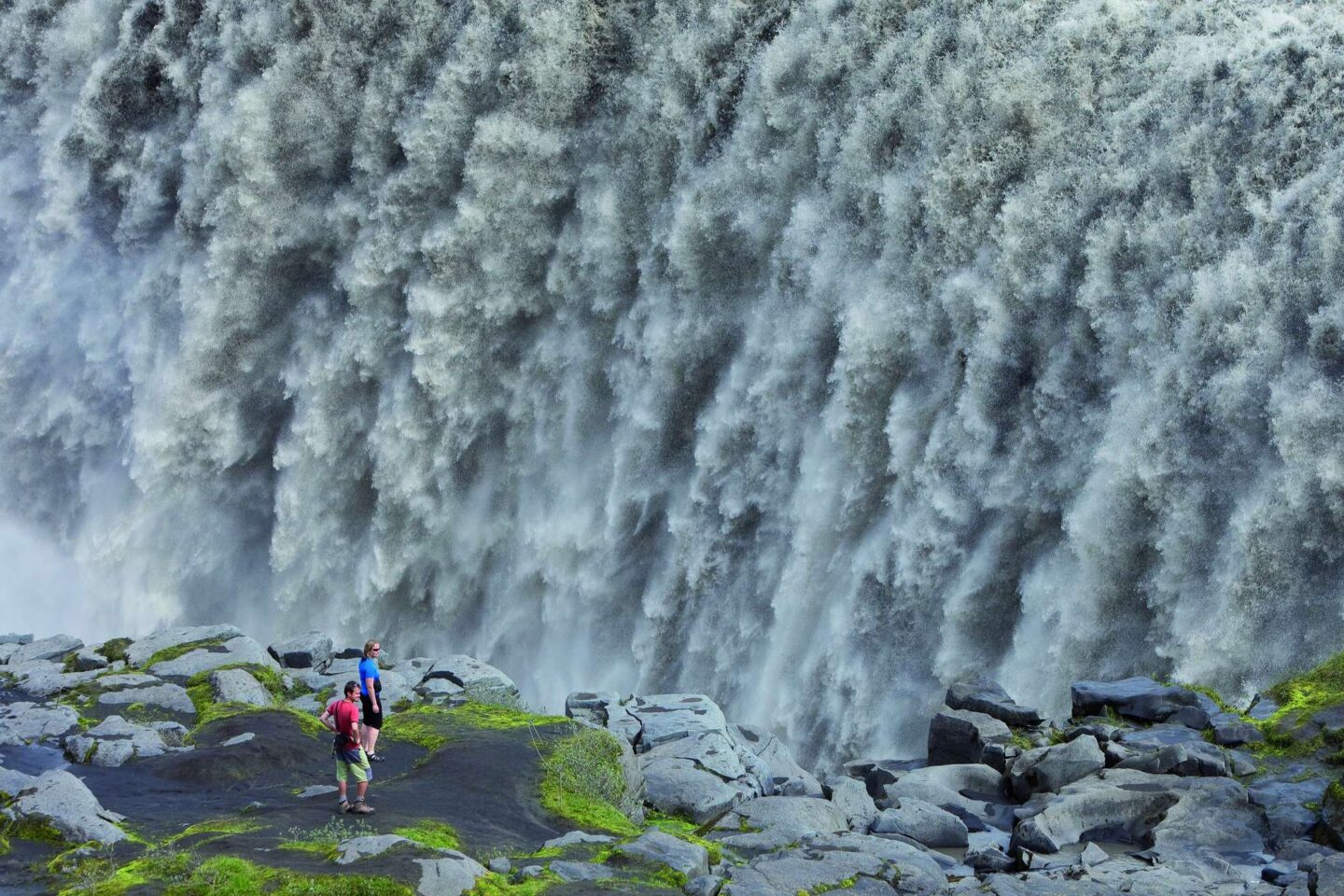

6. Dettifoss: Jokulsa a Fjollum River, Northeast Iceland
Déjà vu? If this roaring, silt-bloated beast seems familiar, you might remember it from the opening scene in Ridley Scott’s sci-fi blockbuster Prometheus. Europe’s most powerful waterfall, 100m-wide Dettifoss might not be pretty, but it is without a doubt Iceland’s most impressive cascade. The volume of water thundering 50m into the Jokulsa Canyon at Dettifoss can reach almost 50,000 cubic metres per minute – that’s like an Olympic swimming pool being emptied over the edge every three seconds.
Nourished by glacial meltwater from the Vatnajokull icecap and churned to ‘frothy chocolate milk’ by volcanic ash scoured from the interior, Dettifoss is a raw, visceral ground-shaker. With care, you can stand at the very brink of the waterfall, confronted by a solid wall of water.
See it for yourself on our: 14-night Fly, Drive & Hike self-drive holiday
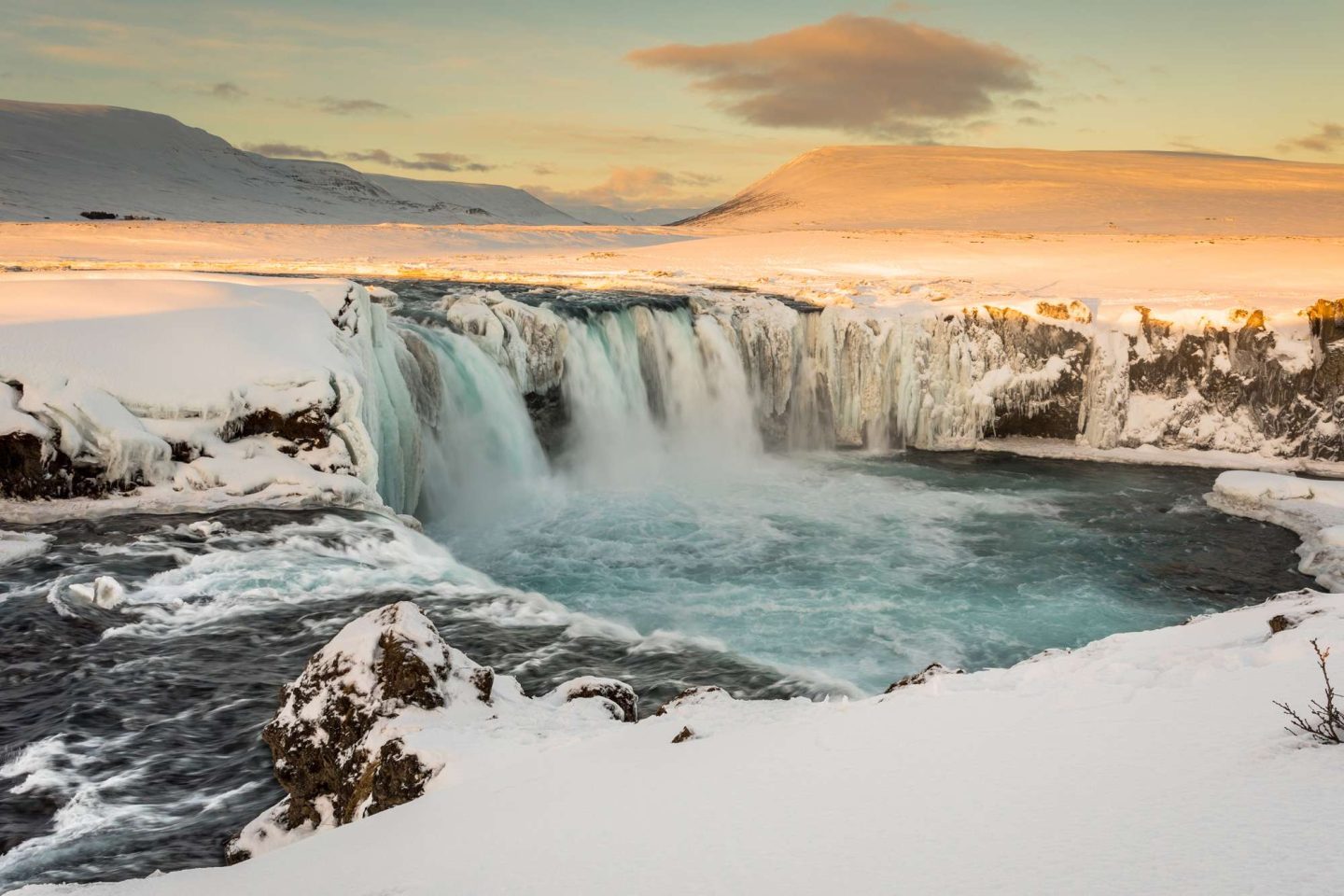

7. Godafoss: Skjalfandafljot River, North Iceland
If Dettifoss (no.6) is the ‘Beast’, then Godafoss – also in Iceland’s north – is sure ‘Beauty’. The ‘Waterfall of the Gods’ is like a mini-Niagara – two main cataracts plunging 12m over a horseshoe-shaped cliff. It’s easily visited on the drive between Akureyri and Lake Myvatn.
You can view the falls from either side, although keen photographers should head to the east bank. Like Gullfoss (no.1), Godafoss is transformed during winter into a stunning, natural ice sculpture – spray turns to thickly textured frost on its cliffs, while plumes of water are transformed into columns of blue and white ice. Heavenly? Perhaps… but Godafoss actually gets its name from when lawspeaker Thorgeir Ljosvetningagodi made Christianity Iceland’s official religion in the year 1000 and threw his statues of pagan Norse gods into the waterfall.
See it for yourself on our 7-night Northern Highlights self-drive
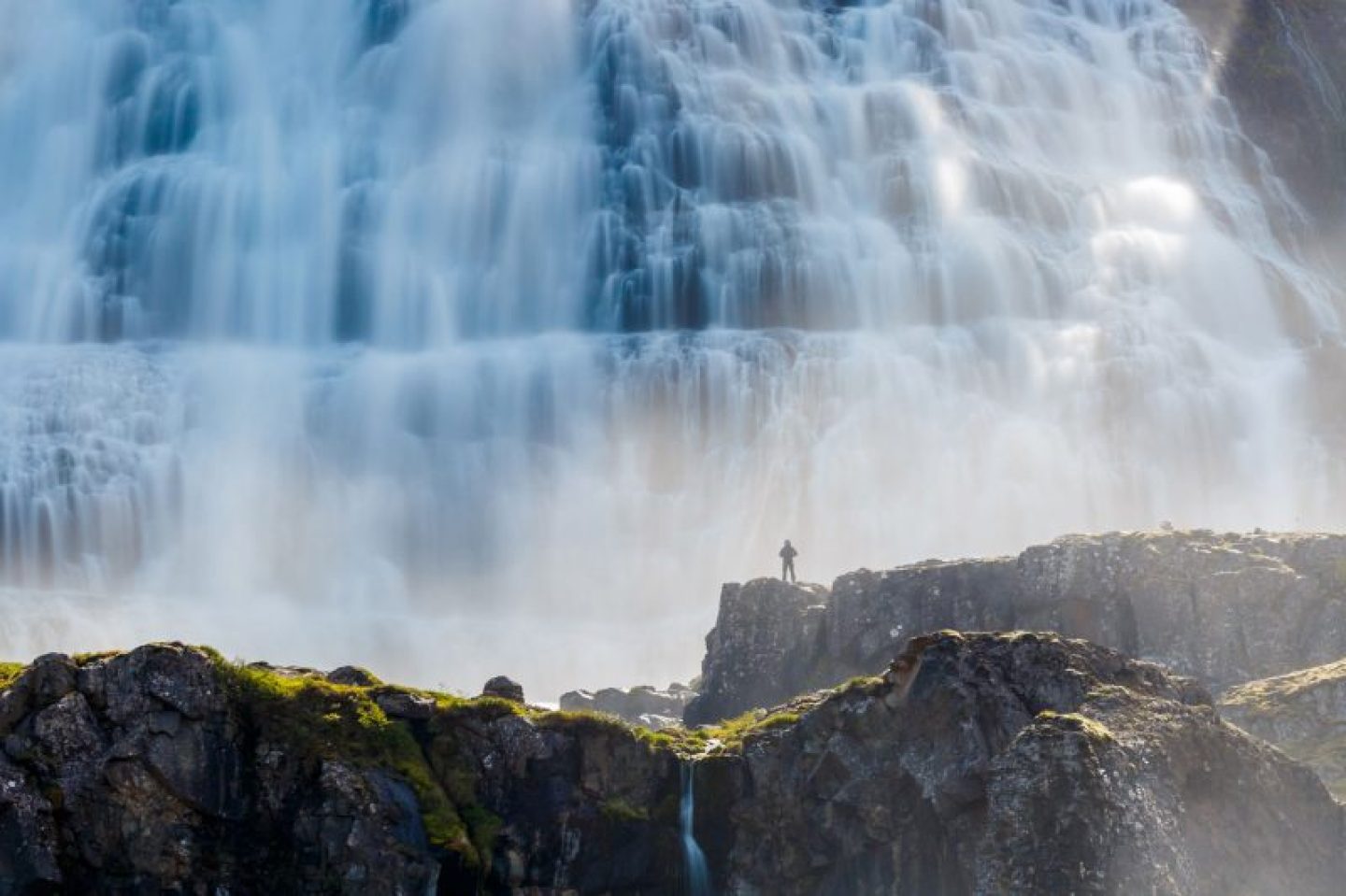

8. Dynjandi: West Fjords
There’s something particularly special about Dynjandi. It’s not simply that you get seven-waterfalls-in-one at this West Fjords beauty, or that it looks particularly stunning lit by summer evening sunlight. Neither is it anything to do with its idyllic setting or scale – tumbling 100m down a mountainside into a glorious fjord.
What really makes you double-take Dynjandi is its shape. No horsetail plume or simple curtain of water here… Instead, some wonderful quirk of geomorphology has conspired to produce the most flamboyant bridal-veil falls you’ll find anywhere. Even more breathtaking is that they seem to unfurl from the sky itself – Lake Eyjavatn, the waterfall’s source, hidden on the plateau above. Hike the trail to the main falls, passing its six minor siblings, and you almost certainly fall under the spell of ‘The Thunderer’.
See it for yourself on our: 14-night The Road Less Travelled self-drive
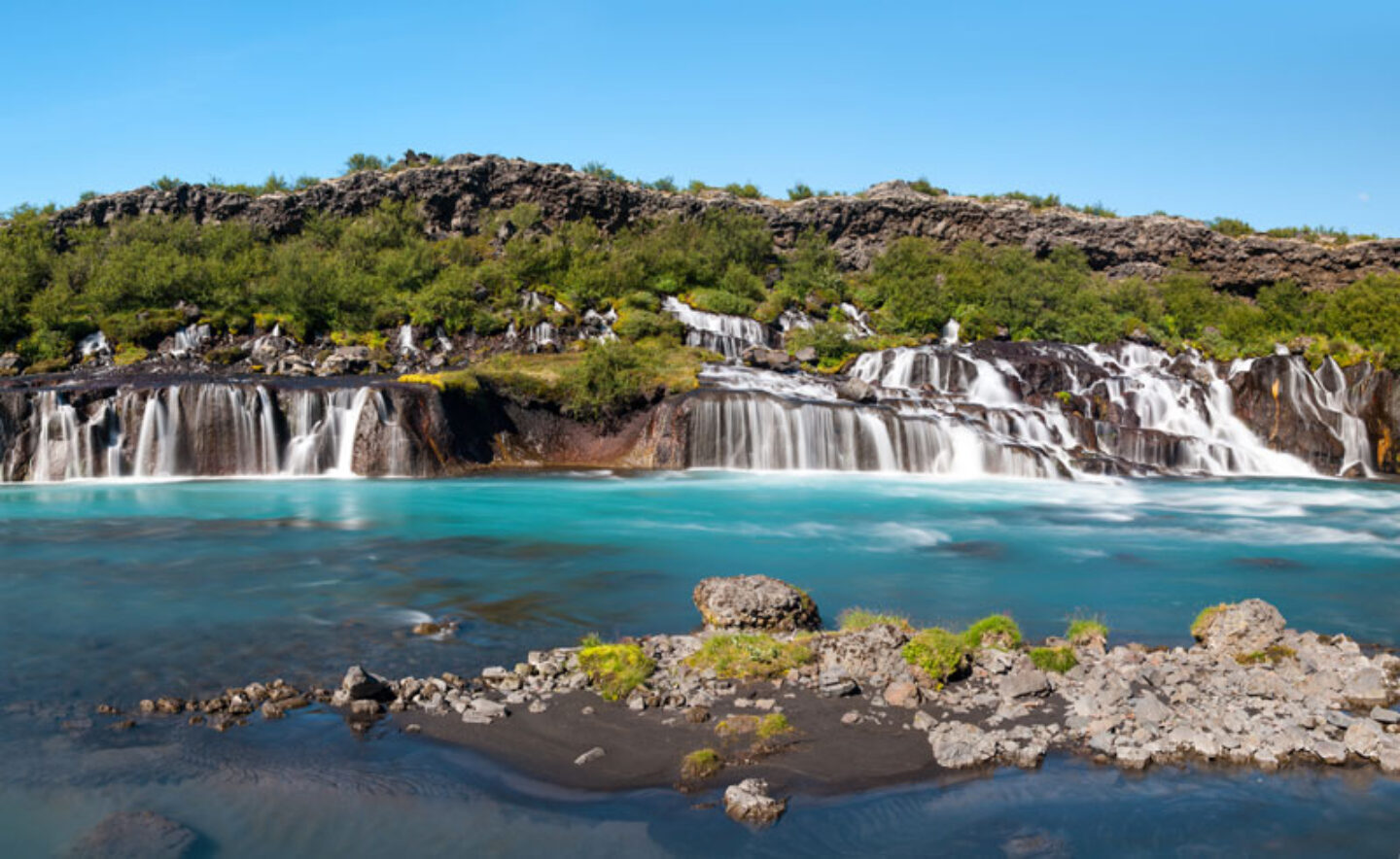

9. Hraunfossar: Near Husafell, West Iceland
With high and mighty waterfalls like Stigafoss and Haifoss not making it onto our Top 10, you might be wondering how Hraunfossar manages to meet the grade. Surely, it’s just a little squirt by comparison to these 100m-tall cliff-hangers? Spanning a 900m stretch of the River Hvita, the delicate ‘Lava Falls’ prove the old adage that size isn’t everything. Appearing as if by magic, they seep from under moss-covered lava, a filigree of rivulets creating a white marbling effect on the dark basalt as they cascade a mere 12m over ledges to dabble with the turquoise waters of the river.
Quirky, unique, almost other-worldly… Hraunfossar’s subterranean springs connect Iceland’s volcanic heart to its sparkling rivers. A stone’s throw upstream is Barnafoss (Waterfall of the Children).
See it for yourself on our 9-night Iceland in Style self-drive
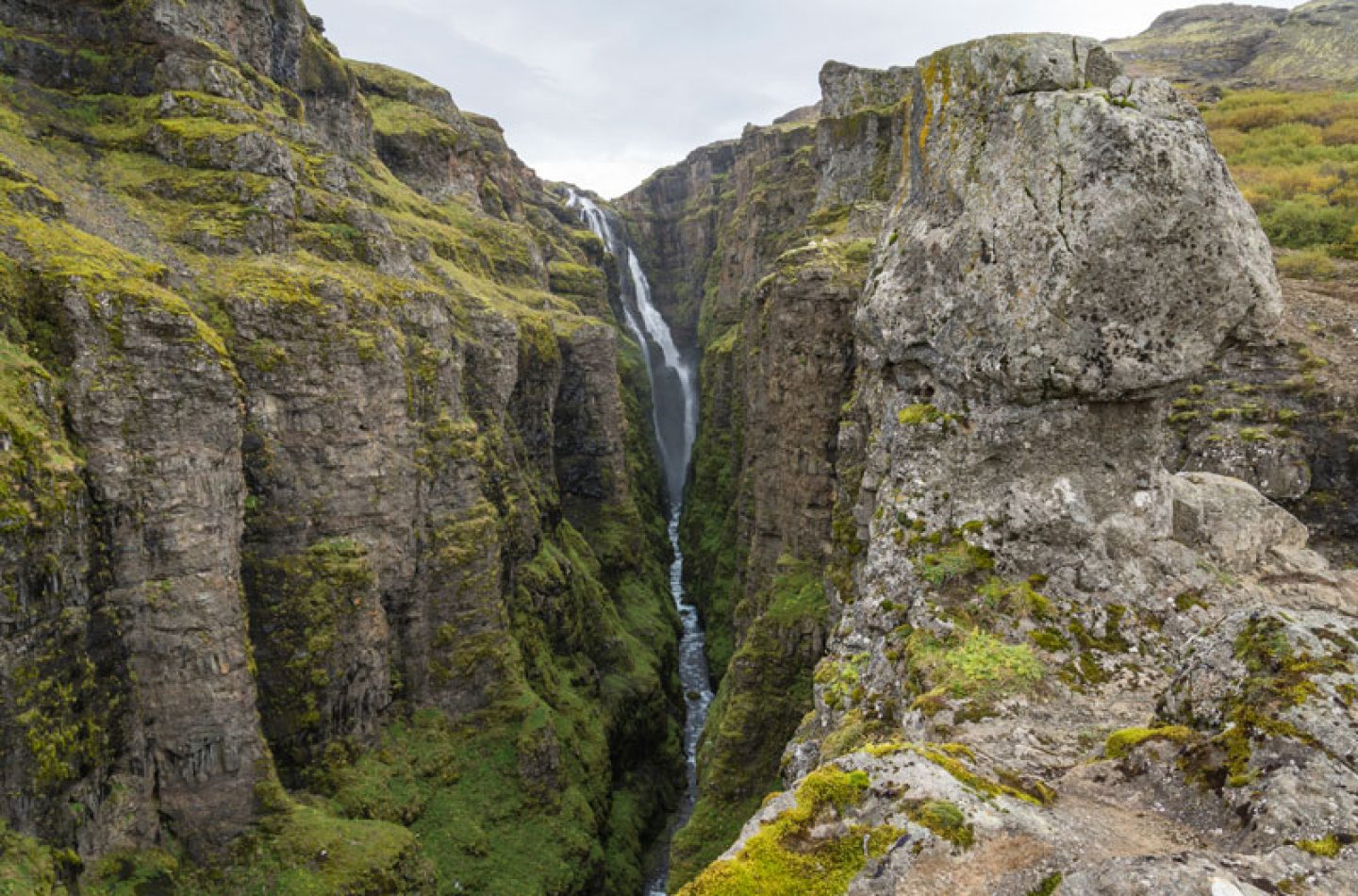

10. Glymur: Hvalfjordur, West Iceland
There’s a torrent of speculation surrounding Iceland’s tallest waterfall. With the discovery in 2007 of 240m Morsarfoss – a remote, inaccessible cascade unleashed from a retreating glacier on the edge of the Vatnajokull icecap – Glymur was bumped to second place. Make no mistake though: this is a big one.
Sluicing 198m through a narrow canyon at the head of Hvalfjordur, Glymur is a compelling reason for you to skip the shortcut through the sea tunnel and take the long way round. Though not for the faint-hearted, the four-hour, round-trip hike to the falls is spectacular. As well as walking through a small cave, you cross the River Botnsa on a narrow log bridge (with a cable hand rail) before scaling the rim of the Glymur’s impressive slot canyon for heart-in-mouth views of the falls.
See it for yourself on our: 7-night Journey to the Centre of the Earth self-drive
Feeling Inspired?
Read more out Iceland’s waterfalls in our travel guide.
Our team of Nordic Travel Specialists are on hand to help with any queries you have about Iceland and it’s waterfalls! Call us on 01737 214 250 or enquire online







 Instagram
 Facebook
 YouTube