
















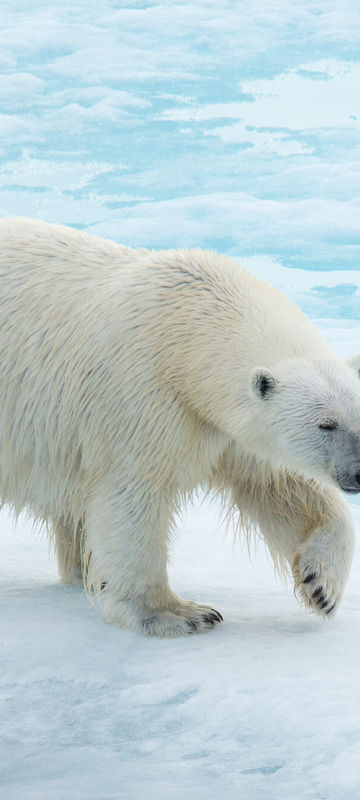
There’s a certain irony that the world’s largest land predator is one of the more elusive species on the plant to encounter. The kingdom of the ice bear spans a vast area across the Arctic where human presence is minimal. Seeking sight of the region’s most impressive mammal requires timing, patience and respect… plus a large dose of specialist guidance. Our concise guide to polar bear watching reveals the best locations to go in search of ice bears, when to do so and how to travel.
In search of polar bears in Svalbard
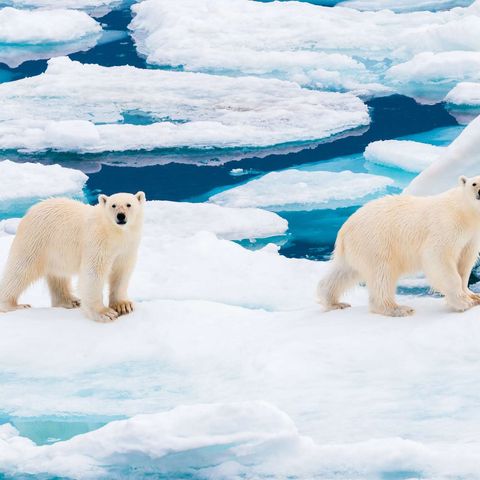
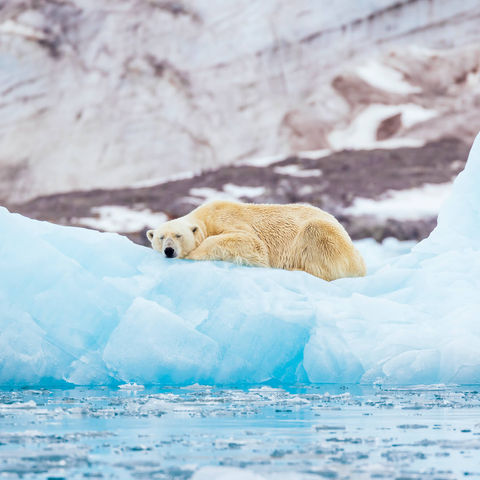
The Svalbard archipelago lies halfway between the northern coast of mainland Norway and the North Pole with Spitsbergen the largest island by some way. A serene and largely untouched landscape comprises craggy mountains, icecaps, huge glaciers and sweeping tundra studded with colourful wildflowers, moss and lichen. The coastline is cut with deep fjords, frozen in winter and studded with icebergs and drift ice during summer. This wild and unspoilt land is alive with nature from seabirds to seals, walrus to whales. It is also very much the realm of polar bears.
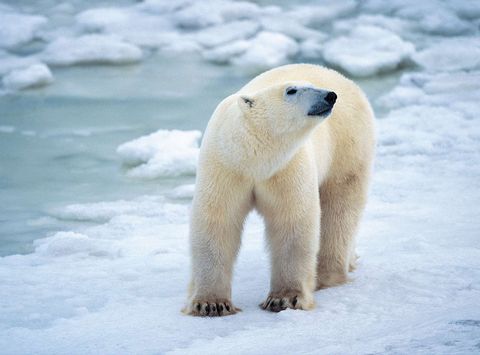
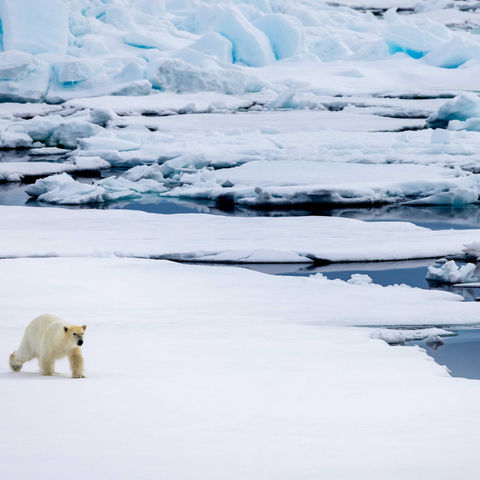
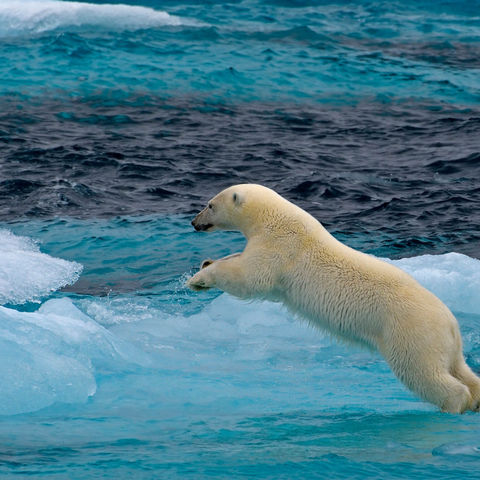
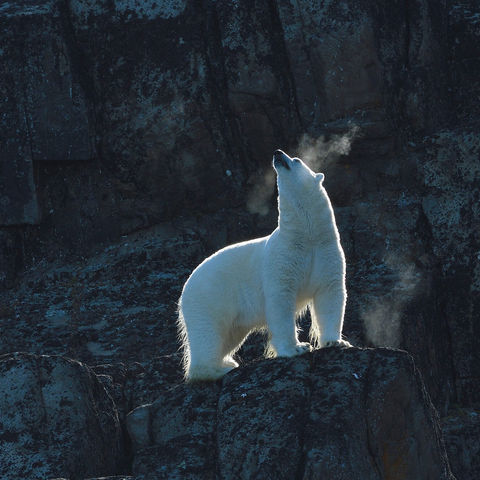
Spending most of their time on drifting sea ice, the bear population around Svalbard is estimated at 3,000, with many migrating between the archipelago and Franz Josef Land to the east. Predominantly solitary creatures, polar bears can be anywhere at any time, but roaming over such a wide area, they are notoriously hard to spot.
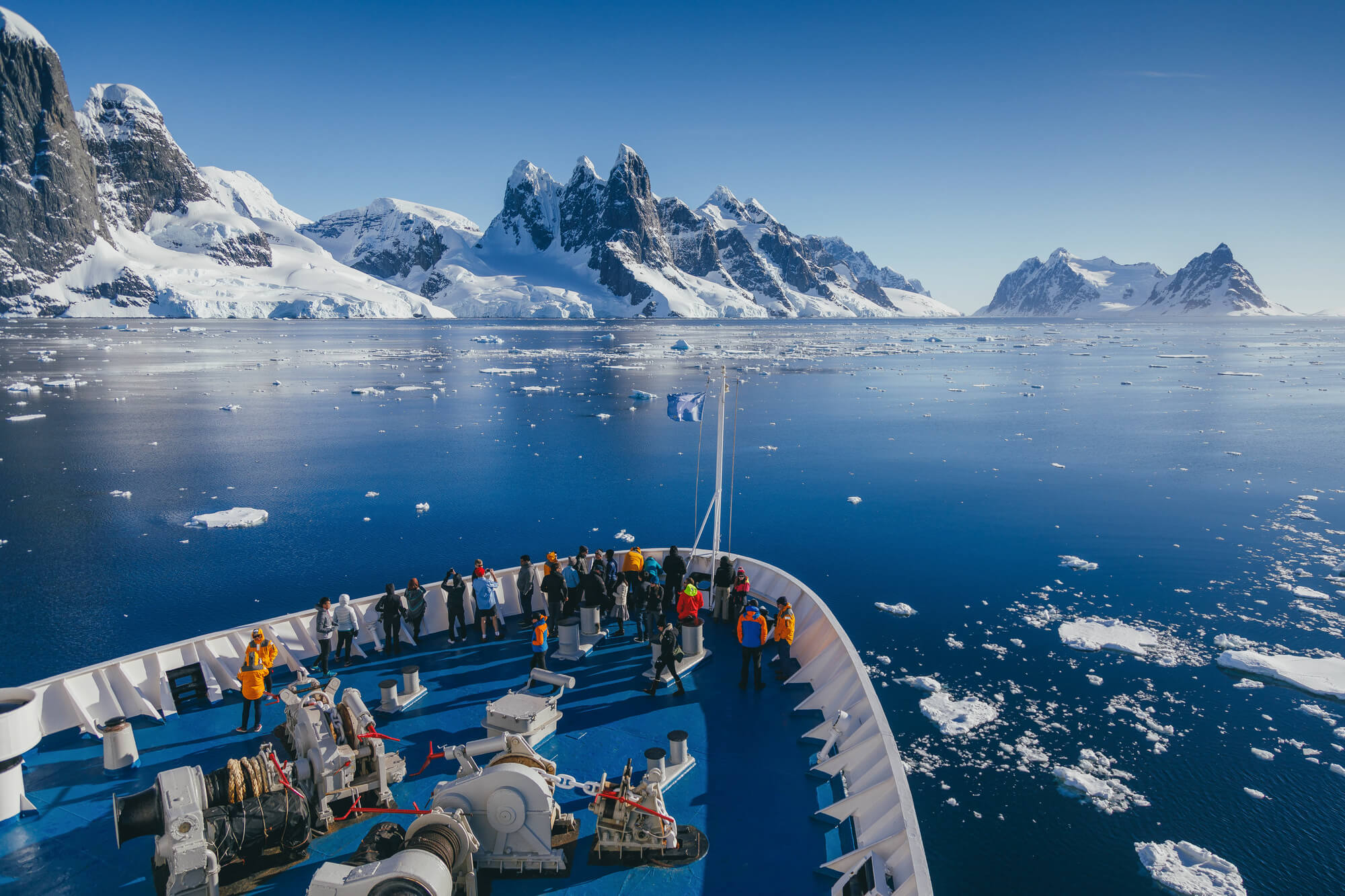
Encounters don’t happen on command, but the sense of expectation that comes from knowing this mighty creature is wandering the landscape, is tantalising. The best way to see polar bears in Svalbard is on a small ship expedition cruise during the Arctic summer. At this time of year, the sun never sets allowing more time to scan the pack ice for signs of this extraordinary creature.
Expedition voyages aren’t your average cruise. They are much more casual. You can turn up to dinner in hiking boots and waterproofs and no-one will bat an eyelid. The emphasis is always what happens off the ship. So, if the call comes that a polar bear has been spotted off the starboard side, or any other amazing wildlife spectacle come to that, you’re ready to react.
New rules were introduced in 2025 restricting motor vessels from approaching more than 300-500m from polar bears, but sightings are still unforgettable. And even if you don’t succeed in encountering the king of the Arctic, a Svalbard voyage is magical. The landscapes alone will leave you spellbound.
Best time to visit: Jun-Aug
Most likely to see polar bears: on ice floes and on distant shores tracking seals.

Encountering polar bears in Churchill, Canada
Every autumn, a remote Canadian town called Churchill is transformed into the ‘Polar Bear Capital of the World’. The town, in northern Manitoba, sits on the edge of Hudson Bay where as many as 1,000 bears gather on in the icy wilderness waiting for the sea to freeze and their hunting season begin. For a short period of time, this frontier town sits right in the middle of the largest concentration of polar bears on earth. This unique gathering is a blessing for wildlife enthusiasts. You are all but guaranteed sightings of polar bears on specialised trips out onto the tundra from late October and November. It’s not unusual to see dozens of bears in a single day… though always on the animals’ terms.
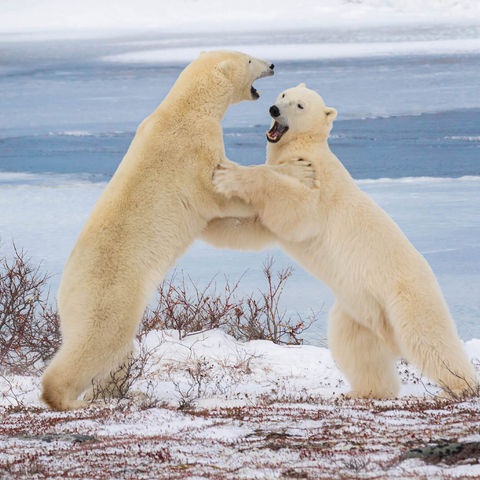
Heading out in search of bears into the protected Churchill Wildlife Management Area is rightly regulated. Only two operators are granted licences to take specially adapted vehicles onto the tundra. Polar Rovers are purpose-built beasts of a vehicle with 5-foot tyres, spacious interiors, large windows and an exterior platform for the best view in the ‘house’. Moving slowly across designated tracks, the bears aren’t at all bothered by such powerful all-terrain vehicles. Some curious bears approach and stand on their hind legs to peer inside the high windows. Others simply ignore the rovers and lollop in the scrub grass or spar with each other nearby. It’s a thrilling experience as I recall below.
Best time to visit: Oct-Nov
Most likely to see polar bears: investigating your Polar Rover out on the tundra.
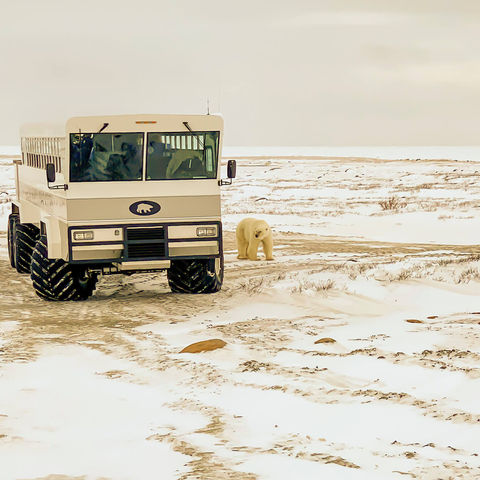
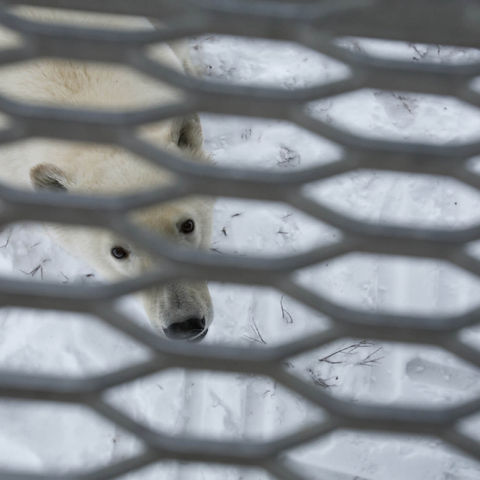
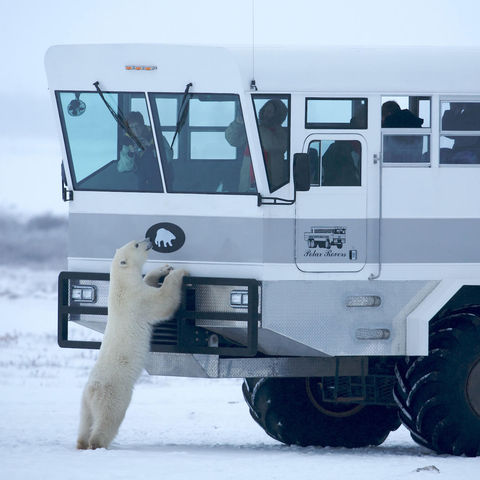
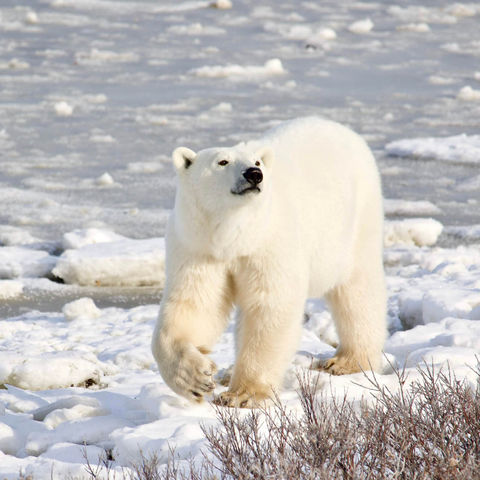
A personal recollection of first sight in Churchill
“The excitement was palpable as our Polar Rover set off for our first excursion onto the tundra, just hours after arriving in Churchill. Fast forward thirty minutes or so and despite 17 pairs of eyes trained on every visible expanse of tundra, there were no bears to be seen. This was not in the brochure.
Where were the bears?
It was time for a reality check. Despite this being the highest concentration of polar bears on the planet, they are largely solitary creatures. Even in the relative hubbub of the tundra around Churchill, they tolerate each other rather than actively seek company. They are also very good at blending in with the natural habitat. Patience is called for. So, resetting my expectations, I reached for my binoculars and prepared for a heroic search.
Naturally, only moments later we spotted our first bear. And then another. Typical! And oh yes, exciting! Totally transfixed and with my heart beating faster again, we drove off along the tundra trail for a closer look.
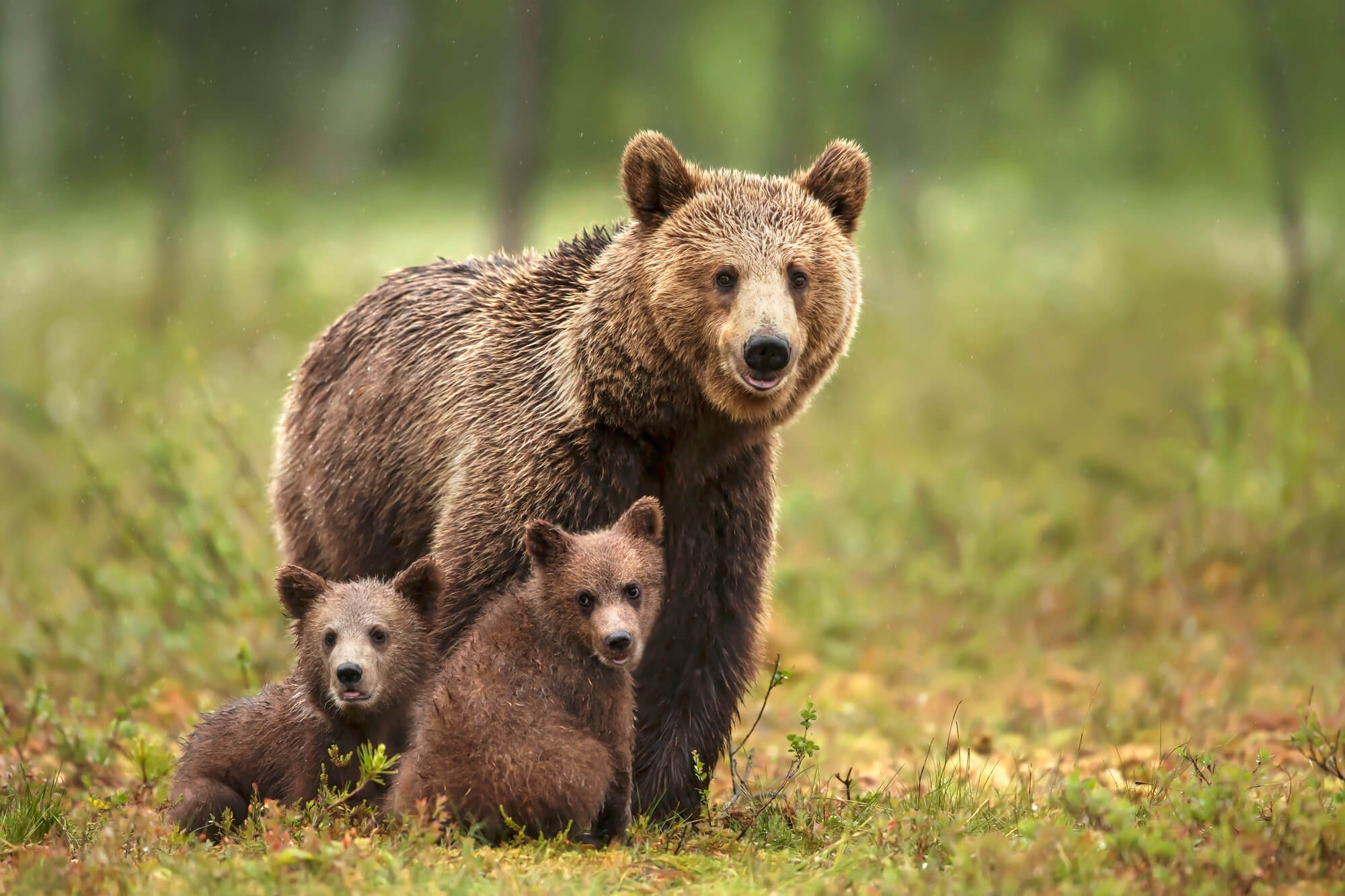
Then something rather wonderful happened. A sudden and rather determined shout from our group members in the rear of the Rover drew our attention to the polar bear, that is, the largest land predator in the world, sitting only meters away casually relaxing in the low-lying willows and calmly watching us. Bear! A big bear! Right there! OK, this was in the brochure…”

Arctic Canada and Greenland
The world’s largest island, Greenland, together with the sprawling Canadian Arctic form the largest land mass in the Arctic. Each cover a vast area of wilderness and like Svalbard, are best visited on a small-ship expedition voyage.
The most likely places to encounter polar bears are on the shoreline and out at sea around Baffin Island and Somerset Island. On the south shore of Devon Island, researchers spent nearly three decades studying polar bear behaviour at Radstock Bay. In Greenland, the remote east coast offers the best chance to see polar bears on a voyage though it is also estimated that over 2,000 bears live along the west coast. Bear are rarely seen near inhabited areas.
A cruise through the fabled Northwest Passage will provide plenty of chances to see polar bears, from embarkation on the west coast to Greenland through to journey’s end at Resolute in Arctic Canada.
Best time to visit: Aug-Sep
Most likely to see polar bears: in the distance patrolling the ice.
Planning your trip
Seeing polar bears in their natural habitat is a life-enhancing experience. If you’re feeling inspired to head off in search of the planet’s largest land predator, browse our collection of itineraries or get in touch with our travel specialists to chat through the options. Call on 01737 214 250 or send an enquiry.


